
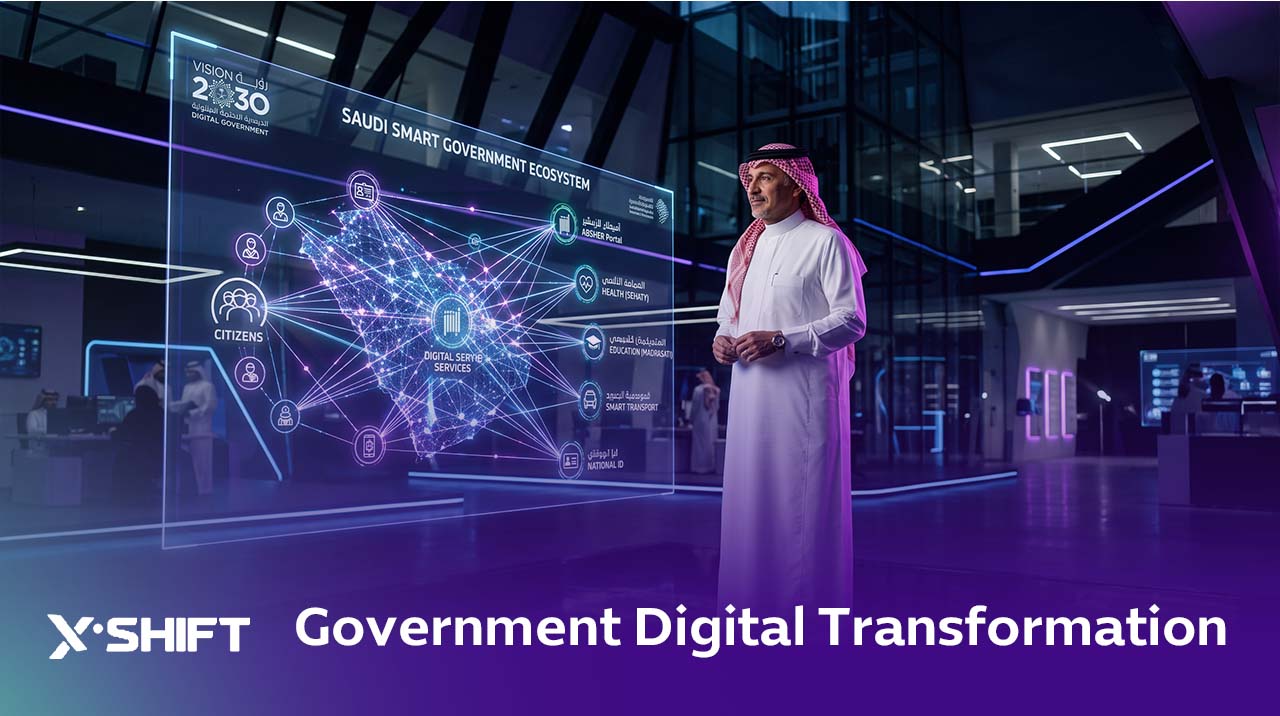
Government Digital Transformation: The 2026 Strategy Guide
Governments around the world are embracing digital innovation to improve public services, strengthen transparency, enhance operational efficiency, and meet the evolving expectations of citizens. As technology continues to reshape every sector, Government Digital Transformation has become a strategic priority for public organizations seeking to modernize service delivery while optimizing internal operations. Digital transformation enables government agencies to move beyond traditional paper-based processes and adopt intelligent digital platforms that improve accessibility, responsiveness, and decision-making.
At X-Shift company, we help government organizations accelerate digital transformation through AI-powered platforms, intelligent automation, customer experience solutions, data analytics, and secure enterprise technologies. Our comprehensive digital transformation solutions empower public institutions to streamline operations, improve citizen engagement, strengthen security, and build sustainable digital ecosystems that support long-term national development.
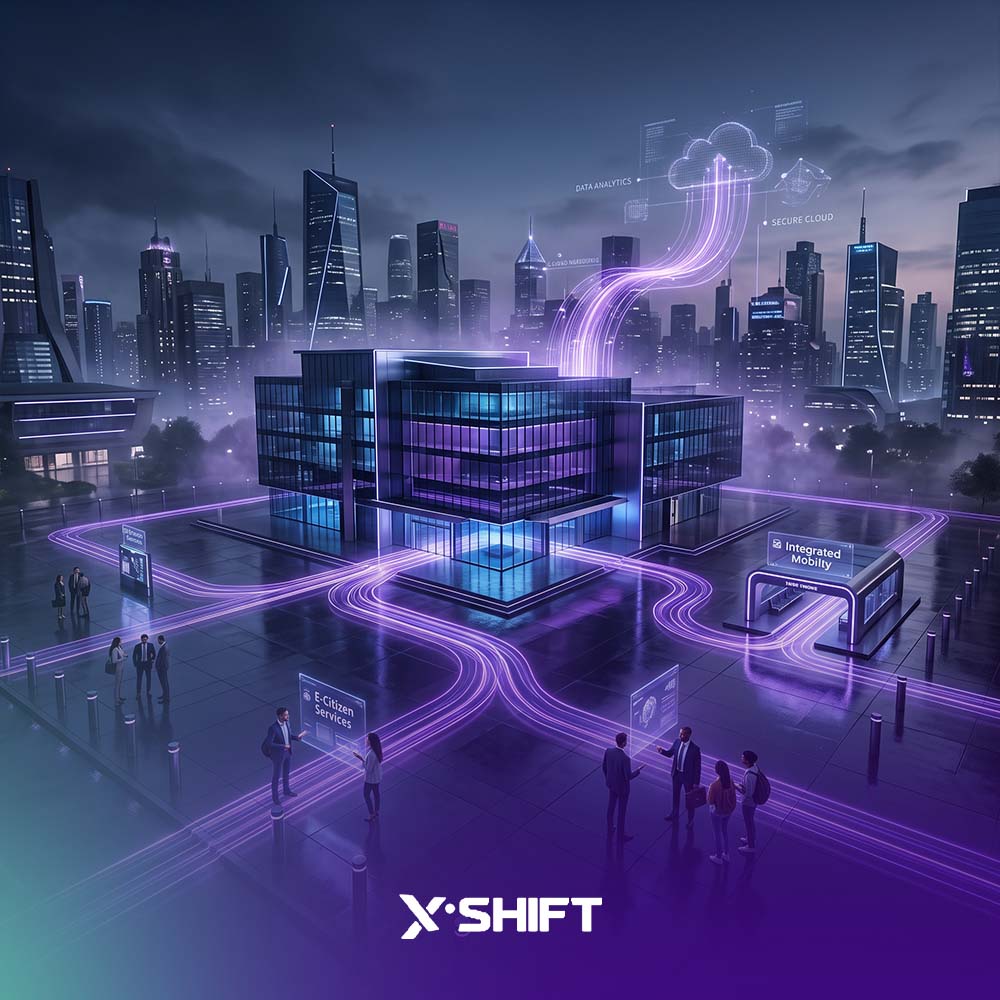
Why Government Digital Transformation Is More Important Than Ever
Citizens increasingly expect government services to offer the same convenience, speed, and personalization they experience with private sector organizations. Public institutions must therefore modernize their digital capabilities while maintaining security, regulatory compliance, and operational transparency. Government Digital Transformation provides the foundation for achieving these objectives by combining advanced technologies with citizen-focused service design.
Improve Citizen Experience
Modern citizens expect government services to be available online, accessible across multiple devices, and easy to use. Digital transformation enables agencies to deliver faster services, reduce paperwork, simplify application processes, and provide real-time communication throughout every stage of the citizen journey.
By digitizing services and integrating multiple communication channels, governments create seamless experiences that improve satisfaction while reducing administrative complexity.
Increase Operational Efficiency
Manual processes often lead to delays, duplicated work, and increased operational costs. Digital transformation introduces automation, centralized data management, and intelligent workflows that eliminate repetitive administrative tasks and improve resource utilization.
Government employees gain faster access to information, collaborate more effectively across departments, and spend more time delivering valuable public services rather than managing paperwork.
Modernizing public sector operations starts with a clear roadmap; explore how end-to-end digital transformation helps public entities deliver seamlessly integrated e-services.

Strengthen Transparency and Accountability
Digital platforms provide complete visibility into government processes, service requests, approvals, and operational performance. Citizens can track applications, monitor service progress, and receive timely updates, while leadership teams gain access to comprehensive operational analytics that support evidence-based decision-making.
This increased transparency strengthens public trust while improving institutional accountability.
Crafting a future-ready framework requires aligning policy with technical readiness; learn how to build a robust digital transformation strategy tailored for large-scale institutional shifts.
Core Technologies Driving Government Digital Transformation
Successful Government Digital Transformation requires more than digitizing existing processes. It involves adopting intelligent technologies that modernize operations, improve citizen engagement, and create scalable digital infrastructure for future innovation. X-Shift delivers integrated technology solutions that enable governments to build resilient and connected digital ecosystems.
Artificial Intelligence and Automation
Artificial intelligence enables governments to automate repetitive tasks, analyze large volumes of public data, and improve service delivery through intelligent decision support.
AI-powered virtual assistants, automated workflows, document processing, predictive analytics, and conversational platforms reduce response times while improving accuracy and operational efficiency. Intelligent automation also allows government employees to focus on complex public service responsibilities instead of repetitive administrative activities.
Digital Citizen Service Platforms
Modern digital government depends on unified service platforms that allow citizens to access multiple public services through a single digital experience.
Integrated portals enable online applications, document submissions, payment processing, appointment scheduling, case tracking, and personalized communication. Citizens benefit from simplified interactions, while government agencies improve operational consistency across departments.
Data Analytics and Business Intelligence
Government agencies generate enormous volumes of operational, demographic, financial, and service-related data every day. Advanced analytics transforms this information into actionable insights that improve planning, resource allocation, policy development, and service optimization.
Real-time dashboards provide leadership teams with visibility into service performance, citizen satisfaction, operational efficiency, and strategic objectives, supporting faster and more informed public sector decisions.
Cloud Computing and Digital Infrastructure
Cloud technologies provide governments with scalable, secure, and cost-effective infrastructure capable of supporting growing digital service demands.
Cloud platforms improve system availability, simplify infrastructure management, enhance disaster recovery capabilities, and enable seamless collaboration between government agencies while maintaining high levels of security and operational resilience.
To automate complex workflows and multi-department decision-making, see how agentic-ai-solutions-in-saudi-arabia empower government bodies with autonomous AI agents.

Enhancing Citizen Engagement Through Digital Government Services
One of the primary objectives of Government Digital Transformation is to strengthen the relationship between governments and citizens. Modern digital services provide faster communication, greater accessibility, and personalized experiences that improve public trust while increasing service efficiency.
Digital engagement platforms enable citizens to interact with government agencies anytime and from anywhere, reducing the need for in-person visits while ensuring greater convenience.
Omnichannel Citizen Communication
Citizens today expect to communicate through their preferred channels, whether websites, mobile applications, contact centers, email, social media, or messaging platforms.
An omnichannel communication strategy connects every interaction into a unified citizen journey, allowing government employees to access complete service histories while delivering faster and more personalized responses.
Streamlining inter-departmental operations demands proven methodologies; check out these five-strategies-for-optimizing-business-processes-through-digital-transformation.
AI-Powered Virtual Assistants
Artificial intelligence has transformed citizen support through intelligent virtual assistants capable of answering questions, guiding users through government procedures, and providing instant access to public information.
AI chatbots and voice assistants reduce waiting times, improve service availability, and support multilingual communication, enabling government agencies to provide consistent assistance around the clock while reducing operational workloads.
Digital Feedback and Citizen Insights
Understanding citizen expectations is essential for continuous service improvement.
Digital feedback platforms collect opinions, satisfaction surveys, complaints, and service evaluations across multiple channels. Advanced analytics transforms this information into valuable insights that help government organizations improve public services, optimize operations, and make more citizen-centric policy decisions.
Before launching large-scale IT initiatives, evaluate your entity’s current digital health using a dedicated digital-maturity-assessment-platform.
Strengthening Government Security and Compliance
As digital government services continue expanding, cybersecurity becomes increasingly important. Public institutions manage sensitive personal, financial, healthcare, and national information that requires comprehensive protection against evolving cyber threats.
Modern Government Digital Transformation strategies integrate security into every technology layer to ensure data confidentiality, operational continuity, and regulatory compliance.
Enterprise Cybersecurity
Advanced cybersecurity solutions protect government infrastructure through continuous monitoring, endpoint protection, identity management, network security, and threat detection.
AI-powered security platforms identify suspicious activities in real time, helping organizations prevent attacks before they disrupt public services or compromise sensitive information.
Identity and Access Management
Secure digital identities are essential for protecting government systems and citizen information.
Role-based access controls, multi-factor authentication, identity verification, and centralized access management ensure that authorized users can securely access government resources while minimizing internal and external security risks.
Regulatory Compliance
Government agencies operate under strict legal and regulatory requirements regarding privacy, information security, accessibility, and digital governance.
Modern digital transformation platforms support compliance with international standards while simplifying auditing, reporting, and governance processes through centralized monitoring and automated documentation.
Delivering citizen-centric digital portals requires scalable architecture; explore our specialized cx-solutions engineered to raise public satisfaction scores.
Data-Driven Decision Making for Public Sector Excellence
One of the greatest advantages of Government Digital Transformation is the ability to make strategic decisions based on accurate, real-time information rather than assumptions.
Unified Government Data
Public sector organizations often manage information across multiple disconnected systems.
Digital transformation integrates operational, financial, citizen, and service data into centralized platforms that provide a complete organizational view. Decision-makers gain access to reliable information that supports planning, budgeting, and service optimization.
Stay ahead of regional technology trends and policy developments by reading our latest report on the future-of-digital-transformation.
Predictive Analytics
Artificial intelligence enables governments to identify trends, forecast future service demand, and anticipate operational challenges before they occur.
Predictive analytics helps agencies allocate resources more effectively, improve emergency preparedness, optimize staffing, and support evidence-based public policy development.
Performance Measurement
Real-time dashboards provide continuous visibility into service delivery, employee productivity, operational efficiency, and citizen satisfaction.
Leadership teams can monitor key performance indicators, identify improvement opportunities, and evaluate the success of digital transformation initiatives through measurable business outcomes.
Modern public administration relies on intuitive, omni-channel engagement; discover how to optimize your digital-customer-experience across all digital touchpoints.
Why Choose X-Shift for Government Digital Transformation?
Successful digital transformation requires more than technology implementation. Governments need trusted partners capable of delivering secure, scalable, and citizen-focused solutions that align with long-term strategic objectives.
AI-Powered Government Solutions
X-Shift combines artificial intelligence, intelligent automation, advanced analytics, conversational AI, and digital service platforms to modernize government operations while improving citizen experiences.
Our solutions automate repetitive processes, optimize workflows, and provide actionable insights that support more efficient public service delivery.
Secure Enterprise Architecture
Security is built into every X-Shift solution through enterprise-grade infrastructure, encrypted communications, identity management, and compliance-ready deployment models.
Government organizations can confidently accelerate digital transformation while protecting critical information and maintaining operational resilience.
Preventing server downtime across public portals requires constant vigilance; see how real-time network-monitoring-services protect vital state infrastructure.
Seamless Integration
Our platforms integrate with existing government applications, enterprise resource planning systems, CRM platforms, identity management solutions, and legacy infrastructure.
This integration minimizes implementation complexity while maximizing the value of existing technology investments.
Scalable Digital Ecosystems
Whether supporting municipalities, ministries, public agencies, or national digital initiatives, X-Shift delivers scalable technology solutions capable of evolving alongside organizational growth and changing public sector requirements.
Uninterrupted public utilities require reliable back-end support; see how it-support-services-for-businesses keep core enterprise systems operational 24/7.
Future Trends in Government Digital Transformation
Technology continues reshaping how governments deliver services and engage with citizens. Several innovations will define the next generation of digital government.
Agentic AI for Public Services
Intelligent AI agents will increasingly automate citizen support, document processing, workflow orchestration, policy recommendations, and administrative decision support while improving service speed and consistency.
Smart Government Analytics
Advanced analytics platforms will combine operational data, citizen feedback, IoT information, and AI-generated insights to enable predictive governance and proactive public service management.
Connected Government Ecosystems
Future government platforms will seamlessly connect agencies, municipalities, healthcare providers, educational institutions, transportation systems, and public utilities through secure digital ecosystems that simplify citizen interactions.
Hyperautomation
Automation technologies will continue expanding across government operations, reducing administrative workloads while improving speed, transparency, and operational efficiency throughout public sector organizations.
Offloading system management allows public entities to focus on innovation; discover the benefits of delegating operations to managed-it-services.
Conclusion
Government Digital Transformation is redefining how public institutions serve citizens, manage operations, and achieve national development objectives. By embracing artificial intelligence, intelligent automation, cloud technologies, advanced analytics, and citizen-centric digital platforms, governments can improve operational efficiency, strengthen transparency, enhance security, and deliver exceptional public services.
At X-Shift, we help government organizations build secure, scalable, and intelligent digital ecosystems that accelerate transformation while improving citizen satisfaction and operational excellence. Our AI-powered solutions empower public institutions to modernize services, optimize performance, and confidently navigate the future of digital government.
Replacing outdated government software with cloud-native frameworks is essential; read how it-modernization-services accelerate system upgrades safely.
Frequently Asked Questions
Enhancing public safety and urban monitoring requires computer vision; explore practical applications of ai-video-analytics-services for smart government facilities.
Reducing bureaucratic delays requires automated workflow solutions; learn how implementing ai-automation-for-business cuts administrative processing times dramatically.