
Industry

Meeting the standard and serving the beneficiary are the same programme

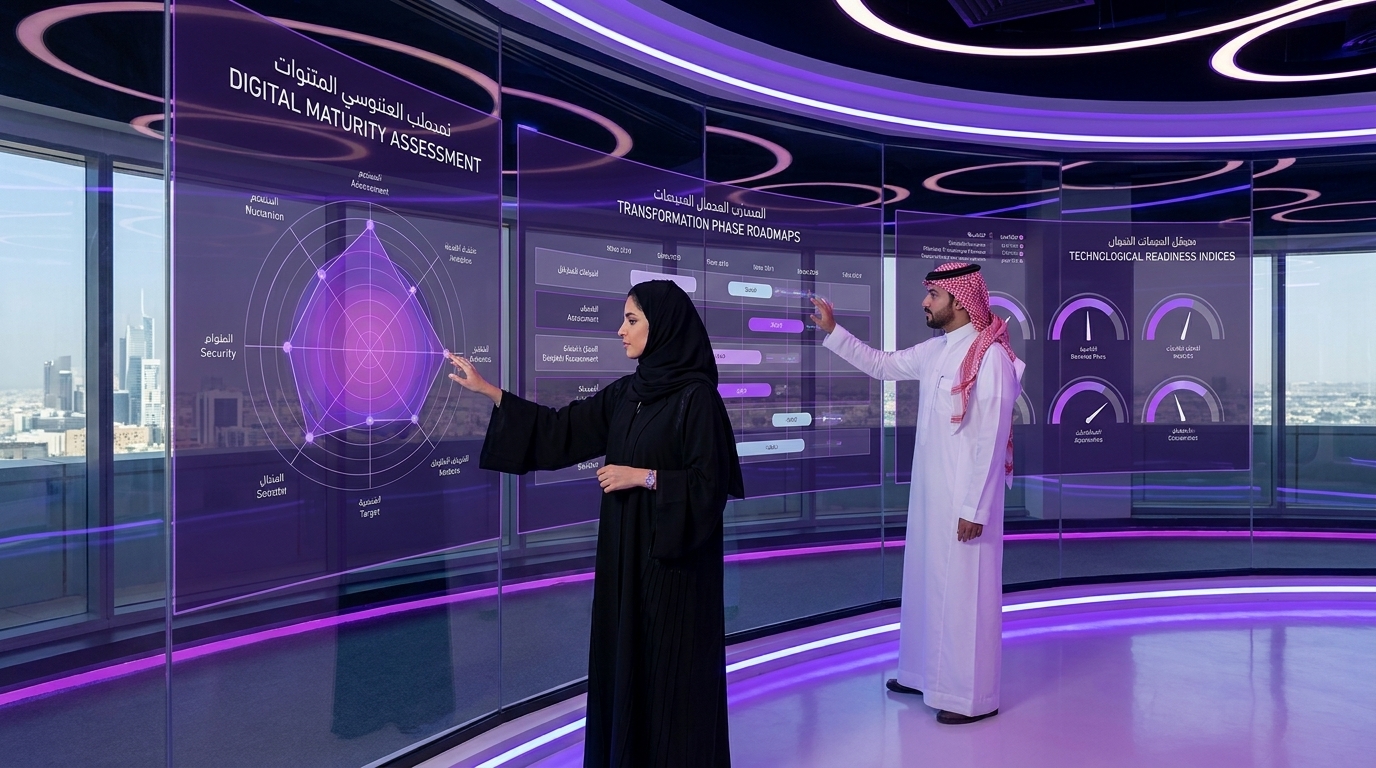
Government entities in the Kingdom are assessed concurrently on digital maturity, service quality and beneficiary satisfaction, against criteria set externally and on cycles outside the entity's control. X-Shift operates on both sides of this requirement: the channels and case handling that beneficiaries encounter, and the architecture, evidence and governance that an assessment requires to be demonstrated. When treated separately, each undermines the other.

Sector
Government & Public Sector
Portfolio
Curated for this sector, not limited to it

What we do here

What X-Shift does inside a government entity

X-Shift supports entities in the Kingdom in two connected areas. First, the channels and case handling that a beneficiary encounters. Second, the architecture, evidence and governance that an assessment requires to be demonstrated. Engagements in this sector typically take one of several forms.

The work is delivered in Arabic and English, implemented in-Kingdom, and designed to operate over existing systems rather than replace them. X-Shift acts as a systems integrator in this context, not as a policy body. The service standard and all decisions remain with the entity. X-Shift is accountable for delivery and for the evidence that supports it.

  • A service and channel assessment that establishes how a published service is delivered in practice across the counter, the call centre and the portal.

  • A case and knowledge implementation that provides a single record and a single answer behind every point of entry.

  • A compliance readiness engagement that turns digital government requirements into a standing evidence base with named control owners.

  • An operated arrangement in which X-Shift operates the contact and digital service layer against measures agreed with the entity.

Priority areas

Where X-Shift commonly creates value here

For government entities, the first gains typically come from a single shared service record and a single evidence base. These are the areas most frequently requested; the full portfolio is available to any entity.

01

Digital Compliance & Maturity

Entities are assessed on externally set cycles, and the evidence resides across systems that were not designed for reporting. This converts the requirement into a standing evidence base with named control owners, so that readiness is visible between assessments rather than reconstructed before each one.

Explore
02

Customer Service & Case Management

A government service is judged on whether a request is completed, not on the channel through which it arrived. A single case record, with routing, service levels and escalation aligned to the entity's published commitments, makes this demonstrable to leadership and to an assessor.

Explore
03

Omnichannel Customer Service

Beneficiaries encounter the counter, the call centre, the portal and the app as a single government. Managing them against the same history eliminates the restatement that dominates repeat contact and the inconsistency that assessments identify first.

Explore
04

AI-Powered Customer Service

Status enquiries, eligibility questions and document requirements account for a significant share of beneficiary contact. AI agents that read the live record and complete the request in Arabic eliminate that volume without requiring a beneficiary to wait for an advisor.

Explore
05

Process Orchestration & Automation

Government services span departments, and the delay rarely originates in the work itself. Coordinating the entire path (people, systems, decisions and approvals) is what converts a published service standard into an operational one.

Explore
06

Knowledge & Self-Service

One approved answer, published once and used by the portal, the call centre and the AI agent alike. It is the most efficient route to consistency across every channel that an entity operates.

Explore
07

Data & Digital Intelligence

Entities are asked to report on service performance that they cannot currently measure. Definitions, ownership and data quality must be established before the dashboard, not after it.

Explore
08

Smart Inspection & Computer Vision

Municipalities, facilities and public sites already operate camera estates. Validated events and retained evidence convert recorded footage into inspection and compliance capability.

Explore

Sector pressures

Assessment cycles move faster than platform replacement cycles

Entities are measured on outcomes the systems behind them were never designed to produce.

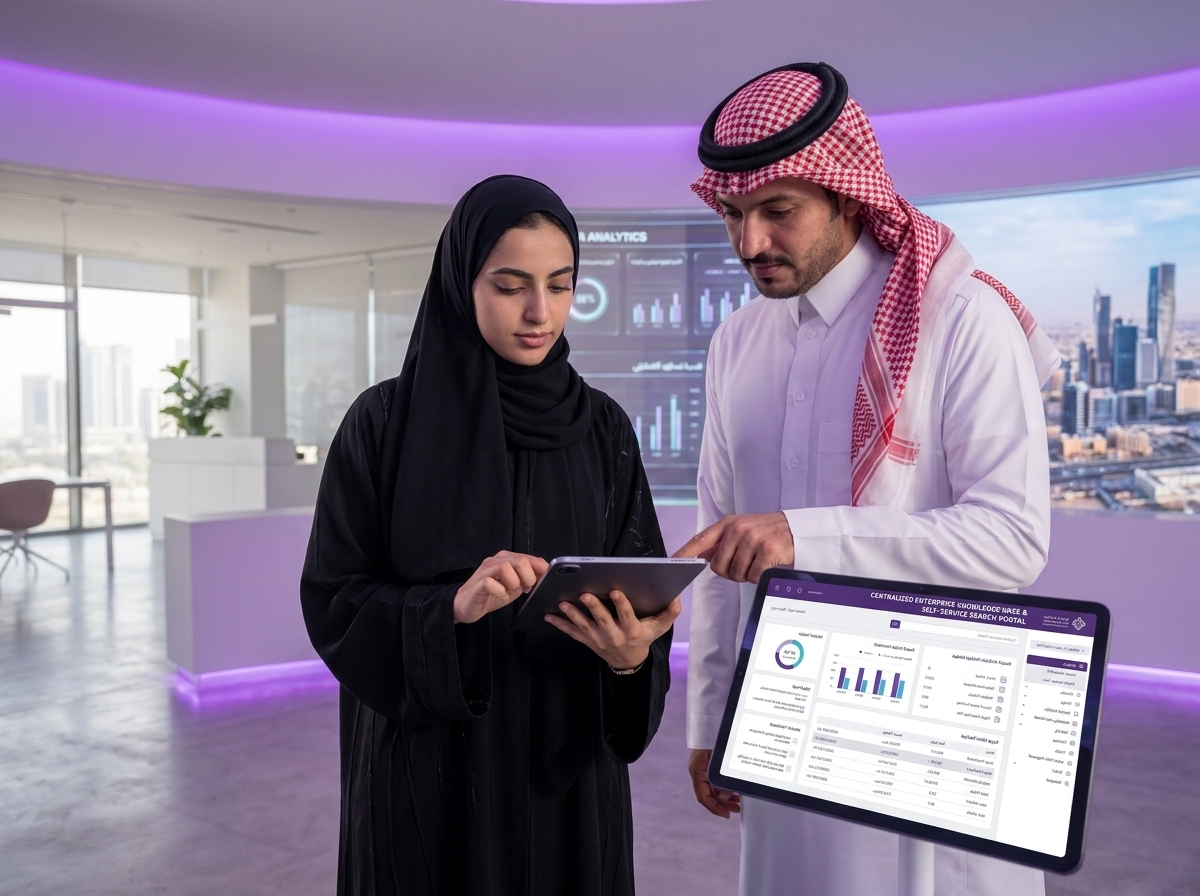
Most entities already run a contact centre, a portal, an app and a set of counter services, each procured at a different time and integrated only where a project forced it. Beneficiaries encounter all of them as a single government, and judge the entity on its slowest component. Meanwhile, digital government requirements, service standards and maturity assessments require evidence that resides across those systems, and collecting it manually consumes the same teams that are responsible for improving the service. The pressure does not stem from a lack of intent. It stems from improvement, measurement and compliance being managed as three separate efforts.

  • Beneficiary requests arrive on channels that do not share a case record or a status

  • Digital and service standards are assessed annually while evidence is gathered manually each time

  • Contact centre demand is dominated by status enquiries that the beneficiary could resolve independently

  • Service procedures differ between branches, the portal and the call centre for the same service

  • Arabic-language service quality is uneven across channels and rarely measured consistently

Typical applications

How the portfolio is typically applied in a government entity

The following are illustrative applications of X-Shift solutions, services and platforms in a government setting. They describe what the portfolio is built to do rather than specific engagements.

  • A single case record for a beneficiary request raised at a counter and followed up by phone

  • Arabic voice AI answering application status enquiries outside working hours without an agent

  • One published knowledge base driving counter, contact centre and portal answers to the same service

  • Standing digital compliance evidence maintained continuously instead of assembled before each assessment

  • Beneficiary satisfaction measurement tied to the specific service and step that produced the score

  • Interaction analytics identifying which service procedures generate the most repeat contact

  • Queue and occupancy observation at service centres using cameras already installed on site

Portfolio

The full portfolio applied in government

Solutions, advisory services and platforms that X-Shift applies in government entities. Everything below can be implemented in-Kingdom and is designed to operate over existing sector systems.

Working as oneGovernment & Public Sector connects Solutions, Services and Platforms.

Not every entity requires every item. In most cases the first engagement covers one service end to end, and the remainder follows from the evidence that it produces.

Common questions

What entities ask first

How is this procured, and does X-Shift work through government frameworks?

Most engagements are contracted directly with the entity through its own procurement route, including competitive tender. X-Shift also works as a subcontractor behind a prime where an entity has already awarded a programme. What X-Shift cannot do is shorten an entity's procurement cycle; planning a service improvement around an assessment date therefore requires that lead time to be built in from the outset.

Where does the data sit, and can it stay in the Kingdom?

Deployments for government entities are in-Kingdom, on the entity's own infrastructure, on a national cloud provider, or in a hosted arrangement approved by the entity. Data classification and residency are agreed before design commences, not retrofitted, because the placement decision alters the architecture rather than sitting on top of it.

Is service delivered natively in Arabic, or translated?

Arabic is the primary service language in this work, not a localisation layer. Knowledge content, case handling, agent-facing procedure and conversational AI are built in Arabic and English together, and Arabic service quality is measured rather than assumed. Where dialect coverage or reading level is a known weakness in a channel, it is preferable that this is raised during design rather than discovered in an assessment.

Next

Where to take this next

01

Commence with one published service

Select a single published service and establish how it is delivered in practice across every channel, what evidence exists for it, and where the beneficiary experience and the assessment criteria diverge.

Applicable where improvement work and compliance work are managed by different teams against different plans.

Consult X-Shift


02

Commence with the evidence position

A readiness review against digital government requirements that establishes what exists, what is missing and who owns each gap, before any platform decision is taken.

Applicable where the next assessment is imminent and the entity's current position cannot be stated.

DGA Compliance Advisory

Entities that treat service improvement and assessment readiness as one programme incur lower costs on both. When managed separately, each continually undermines the other.

Nothing here is sector-exclusive

Explore the full X-Shift portfolio

This page presents the offerings most relevant to the government & public sector. It does not represent the full extent of what X-Shift delivers in this sector.

Commence with the constraint, not the catalogue.

X-Shift establishes whether the constraint resides in strategy, process, technology or operating model, and what is required to resolve it.