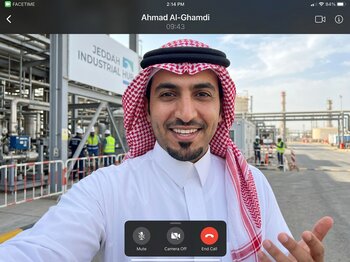
Solution · Remote Customer Experience

Deliver the expertise, not the person

A significant proportion of organisational travel exists so that a qualified person can inspect a condition and record the findings. This solution performs that function remotely, with structure, evidence and a closed record.

Overview

A structured visit, conducted over video

Structure is what distinguishes this from a video call.

The visit is scheduled, assigned and driven by a checklist that enforces consistency between assessors. Evidence (images, video, documents and notes) is captured against the specific checklist item it supports as the visit proceeds. Findings are recorded with severity and required action, follow-ups are assigned with owners and due dates, and the record progresses through approval to closure with a complete audit history.

The platform is X-Shift's Virtual Visit, so the checklist constitutes your assessment instrument rather than a form appended to a video call. When a ministry amends what an inspection must cover, the checklist, the evidence rules and the closure rules are updated together. The changes apply to the next visit, not the next software release.

Key features

Key features

01

Scheduled and assigned visits

Visits are planned with participants, purpose and checklist defined before the session commences.

and 5 more below

Virtual Visit & Remote AssistanceIllustrative
FEATURE Scheduled and assigned visits Availability Mon Tue Wed Thu Fri 09:00 Free Free 10:30 Free Hold Free 12:00 Free Free Free 13:30 Free Free 15:00 Free Free Free Availability illustrative

Findings

Structured findings with category, severity and the action each one requires.

Follow-up and approval

Actions are assigned with owners and dates, with a review step before the record is treated as final.

Closure and audit history

Formal closure with a complete record of the actions taken, by whom, when, and on what evidence.

Reporting

Volume, findings, outcomes and trends are reported across visit types, assessors and periods.

Integration

Integration with scheduling, case, asset and reporting systems via APIs.

In practice

Two assessors, one standard

01

Same instrumentBoth visits are conducted from the same checklist, so that both records cover the same points in the same order.

02

Attached evidenceEach photograph is captured against the checklist item it evidences, rather than into a shared drive.

03

Owned findingsFindings carry a severity and an owner, and a visit cannot be closed while any action remains unassigned.

The scenario Two assessors visit similar sites in the same week and file reports of different lengths, covering different points, with photographs stored in each assessor's own folder. Comparing the two sites afterwards requires reading both reports and inferring what was not documented.

This is the Virtual Visit platform enforcing the instrument you designed. It does not improve an assessor's judgement, and a weak checklist will produce consistent records of the wrong criteria.

The challenge

The travel is the cost. The judgement is the value.

Site visits are expensive in time before they are expensive in money.

A specialist spends most of a day to deliver perhaps an hour of expertise. Scheduling is constrained by geography, coverage is limited by headcount, and the record of events depends on notes written afterwards. The judgement applied is highly valuable; almost nothing else in the visit is.

Specialist time consumed by travel rather than assessment

Coverage limited by how far a team can physically reach

Extended lead times, because visits must be scheduled around travel

Inconsistent records, because each assessor documents findings differently

Evidence captured on mobile devices and filed separately from the record

Follow-up actions tracked by email after the visit is closed

Where it applies

What becomes remote

Customer and beneficiary visits

Scheduled engagement conducted remotely with the same structure and record as a site visit.

Expert sessions

Access to a specialist who would not otherwise be available at that location or in that timeframe.

Guided assistance

Guiding a customer or field team through a process, installation or form in real time.

Assessments

Structured assessment against a defined checklist, with evidence captured as it is conducted.

Service interactions

Service that requires the situation to be observed before it can be diagnosed or resolved.

Verification

Confirmation of condition, presence or compliance without dispatching a person to verify it.

Outcomes

What changes for the operation

What this changes

The constraint that is removed is coverage. A team that could previously reach only a small number of sites each week can reach considerably more once travel is eliminated.

01

Specialist time dedicated to assessment rather than travel

02

Coverage extended without proportional increase in headcount

03

Lead times shortened, as scheduling is no longer constrained by geography

04

Consistent records, as the checklist drives the visit

05

Evidence attached to the finding rather than filed separately

06

Follow-up actions tracked to closure rather than by email

Suitability

Where remote inspection is suitable, and where it is not

The fastest way to undermine an inspection programme is to promise that all of it can be performed remotely. Determining which inspection types qualify is the first piece of work, and the candid conclusion is that some do not.

Who

Remote inspection is suitable when

01 The condition can be verified by visual inspection
02 A person is able to reach the area safely and operate a device there
03 The evidence the decision needs can be captured digitally
04 Connectivity at the location is sufficient to enable real-time guidance
05 No physical sampling, measurement or testing is required
06 The applicable regulation permits remote assessment

Six tests to be applied before an inspection type is added to the remote programme.

What

Physical attendance remains necessary when

01 Specialist instruments or equipment must be used on site
02 Destructive or intrusive testing forms part of the assessment
03 The condition is concealed and cannot be exposed on camera
04 Site safety renders remote guidance of a person inappropriate
05 The regulation mandates in-person attendance by an inspector
06 The evidence obtainable remotely would not support the decision

Any one of these conditions is sufficient reason to retain physical inspection.

What we do

What the engagement involves

Implementing the platform is the smallest part of this. The work lies in determining which inspections shift to remote delivery, translating written requirements into criteria that a person can answer on a mobile device, and defining decision authority where the two are in conflict.

01

Determine scope

Review the inspection types you operate against the suitability test, and agree which become remote, which remain physical, and which become a remote first pass with a physical exception.

OutputAn agreed scope, and an agreed exclusion list
02

Turn requirements into criteria

Translate the standard, policy or regulation into checklist items that can be answered on site, with the evidence each requires and the conditional logic between them.

OutputChecklists that produce defensible answers
03

Define the operating model

Defines who schedules, who inspects and who reviews, what the person on site is responsible for, and the procedure to follow when a visit cannot be completed as planned.

OutputRoles and exceptions defined before go-live
04

Configure and integrate

Configure Virtual Visit for those inspection types, and connect the visit record to the case, asset, project or workflow system in which it must reside.

OutputInspections recorded in the systems of record
05

Determine where AI is applied

Identify the criteria suited to visual analysis, define the review controls around them, and determine the procedure when a result is uncertain, before any of it is activated.

OutputAI applied where it adds value, with human review defined
06

Establish governance

Dashboards, evidence retention, audit trail and the measures against which the programme will be assessed, agreed with those who will be accountable for them.

OutputA programme that can be governed, not merely operated

What changes

What changes when the judgement is transmitted rather than the inspector

These are stated as categories. The figures will be yours, measured against your own baseline; X-Shift would rather agree how the programme is measured before it commences than publish another organisation's figures.

01

Travel ceases to be the cost of an opinion

Where the value of the visit lay in observing the condition and applying judgement to it, the journey was overhead rather than part of the assessment.

and 3 more below

Virtual Visit & Remote AssistanceIllustrative
WHAT CHANGES Travel ceases to be the cost of an opinion Path Service standards Complete Case handling Complete 3 Escalation and SLA In progress 4 Complaint recovery Not started Certification issued on completion of the path Path illustrative

Findings no longer lapse

Corrective actions carry owners and dates, and closure requires evidence, so that findings remain visible until remediated.

Repeat visits are reduced

Verification of a correction that can be observed does not require another journey, which is where a significant share of inspection travel is incurred.

The programme becomes auditable

Volume, outcomes, open findings and recurring failures can be reported across sites and periods, rather than reconstructed from individual reports on request.

Use cases

Where travel was the significant cost

Each is a case in which a qualified person must inspect a condition and record the findings.

01

Licensing inspections across a wide region with Virtual Visit

Situation

A licensing team inspects premises spread across a region, so that an assessor spends most of a working day travelling in order to deliver an hour of judgement.

What happens
  1. Join the visit
  2. Work the checklist
  3. Capture the evidence
  4. Close with approval
Outcome

A remote first pass triages the straightforward premises, and site visits are reserved for the cases identified by that pass.

Commonly applied in Government and across other sectors
02

Home follow-up between appointments with Virtual Visit

Situation

A discharged patient requires a clinician to observe a wound or a home set-up, and the next available district nurse appointment is several days away.

What happens
  1. Join the visit
  2. Work the checklist
  3. Capture the evidence
  4. Close with approval
Outcome

The clinician observes the situation the same day and records the finding against the relevant checklist item.

Commonly applied in Healthcare and across other sectors

03

Damage assessment before dispatching a crew with Virtual Visit

Situation

A reported network fault requires a qualified person to assess it before a crew and equipment are dispatched, and the assessor is two governorates away.

What happens
  1. Join the visit
  2. Work the checklist
  3. Capture the evidence
  4. Close with approval
Outcome

The assessment is conducted over video with images captured against the record, so that the crew is dispatched with the correct equipment.

Commonly applied in Utilities and across other sectors

More ways to apply it

Facility assessments across campuses with Virtual Visit

Virtual Visit drives every assessment from the same checklist, so that two campuses can be compared on the same criteria.

Education

Warranty claims requiring a physical look with Virtual Visit

The assessor inspects over video with evidence captured per checklist item, and the claim is determined without the service bay remaining idle.

Automotive

Store standards audited unevenly with Virtual Visit

Every store is audited against the same instrument at the same frequency, and findings carry an owner and a due date.

Retail

These are illustrative applications rather than delivered projects. Whether a visit type can be conducted remotely depends on what your assessors are required to observe.

Common questions

What buyers ask before committing

Next

Where to go next

Convert one checklist and run it

Select your most frequently used assessment instrument, review it structured as a driven checklist with evidence requirements per item, and conduct a live visit against it.

Applicable where the visit type that consumes the most travel is already known.

Request a pilot visit

Design the remote journey

Customer Journey & Service Design determines what the visit must entail when the assessor cannot see the room, which requires a different instrument rather than the same one over video.

Applicable where existing checklists assume the assessor is physically on site.

Customer Journey & Service Design

Where the assessment depends on physical presence, X-Shift will advise accordingly rather than promote a remote model that produces weaker evidence.

Where this sits

Related

Runs onVirtual VisitThe remote visit and assistance platform.
Applied inHealthcareRemote patient and service interactions.
Applied inGovernmentBeneficiary visits and remote assessment.
Deployed asVirtual BranchRemote delivery of branch-based services.

Also relevantSmart Inspection & Computer VisionCustomer Journey & Service Design

Technology that enables it

What this is built on

These are platforms that X-Shift builds and supports. Where your estate already covers one of these, the engagement becomes integration and operating model work rather than a platform deployment, and X-Shift will advise accordingly.

Remote visit and evidence Illustrative
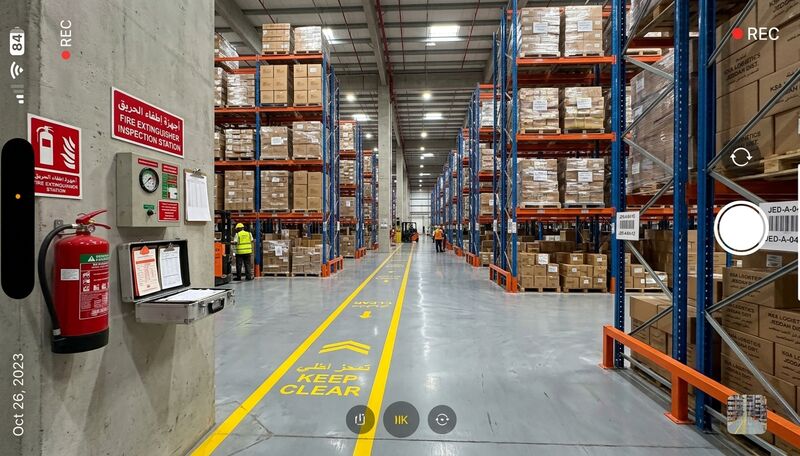
Visit in progress Warehouse 3 · Jeddah
Live site inspection feed
LIVE · 08:24
Mobile Camera
Target Area
Saudi Site Contact

Assessor and site, joined from a browser

CHECKLIST · ELIGIBILITY VISIT
Property confirmed at the address
2 images Evidence 1 Evidence 2
Occupancy matches the application
1 image Evidence 3
Condition assessed against criteria
3 images Evidence 4 Evidence 5 Evidence 6
4
Supporting documents sighted
1 document
5
Assessor finding recorded
Pending
Two assessors, one instrument, comparable records

A representative view of the Virtual Visit interface, built from the product's own model. Any figures shown are samples.

Is this the capability you require?

Describe what is not working today, and we will advise whether this is the right answer, a smaller piece of work, or an entirely different problem.