
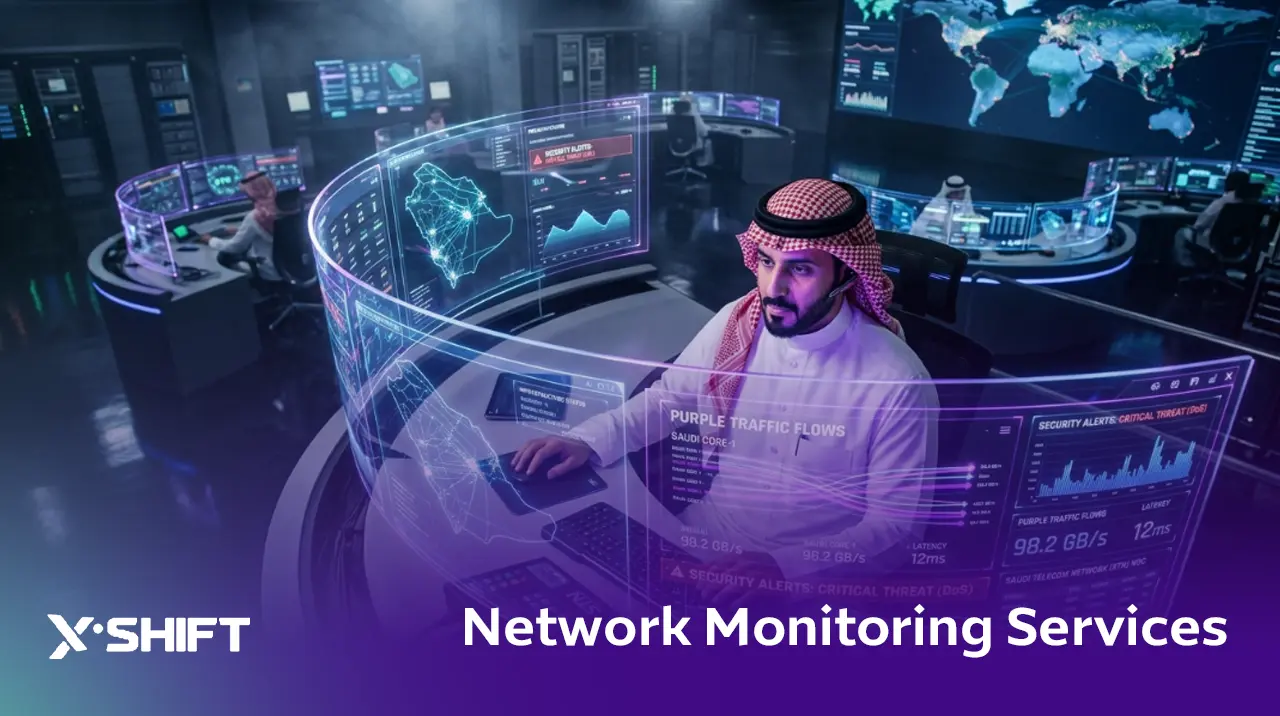
Network Monitoring Services: Ultimate Guide to Efficiency
Modern enterprises depend heavily on stable, secure, and high performing network infrastructures to support daily operations, customer engagement, and digital transformation initiatives. As organizations continue expanding their digital ecosystems, the demand for Network Monitoring Services has increased significantly across industries. Businesses today require continuous visibility into network performance to maintain operational continuity and prevent costly disruptions that can affect productivity and customer experience.
The growing importance of Network Monitoring Services is directly connected to the increasing complexity of enterprise infrastructures, cloud environments, remote work systems, and cybersecurity challenges. Organizations that implement proactive monitoring strategies can identify operational issues before they escalate into critical failures. With advanced enterprise technologies from x-shift, businesses can strengthen network visibility, optimize operational performance, and improve infrastructure resilience across modern digital environments.

The Importance of Network Monitoring Services
Enterprise networks serve as the foundation for communication, data transfer, cloud connectivity, and digital operations. Any disruption within these environments can significantly affect productivity and operational continuity. Network Monitoring Services help organizations maintain stability, improve visibility, and support long term infrastructure performance.
Ensuring Operational Continuity
Unexpected network outages can disrupt workflows, delay customer interactions, and negatively impact business productivity. Organizations implementing Network Monitoring Services can proactively identify connectivity issues, performance bottlenecks, and infrastructure failures before they affect critical business operations.
Improving Network Performance
Modern enterprises rely on complex infrastructures that require continuous optimization to maintain speed and reliability. Businesses using Network Monitoring Services can analyze bandwidth usage, identify network congestion, and improve operational efficiency through real time infrastructure insights and proactive management.
Strengthening Infrastructure Visibility
Without centralized visibility, organizations may struggle to identify operational weaknesses across interconnected environments. Companies leveraging Network Monitoring Services gain deeper insights into infrastructure health, device performance, and operational trends that support faster and more informed decision making.
Core Components of Network Monitoring Services
Effective monitoring strategies involve much more than simply detecting outages. Modern Network Monitoring Services combine automation, analytics, and intelligent infrastructure management to maintain operational stability and optimize performance across enterprise environments.
Real Time Performance Monitoring
Continuous performance tracking allows organizations to monitor network activity, bandwidth usage, and infrastructure responsiveness in real time. Businesses implementing Network Monitoring Services can identify performance anomalies quickly and resolve operational issues before they impact users or critical systems.
Infrastructure Health Analysis
Infrastructure health monitoring provides organizations with visibility into servers, routers, switches, and connected devices across operational environments. Companies using Network Monitoring Services can maintain infrastructure reliability by identifying hardware degradation, configuration problems, and connectivity weaknesses proactively.
Automated Alerting and Incident Response
Automated monitoring systems notify support teams immediately when unusual activity or infrastructure failures occur. Organizations leveraging Network Monitoring Services can reduce downtime through faster incident response and proactive operational management that minimizes disruption risks.
How x-shift Enhances Network Monitoring Services
x-shift provides enterprise focused technologies and integrated operational solutions designed to help organizations modernize network management and strengthen infrastructure performance. Through intelligent systems and scalable digital services, x-shift supports businesses across complex operational environments.
Agentic Artificial Intelligence
The Agentic Artificial Intelligence solutions offered by x-shift help organizations automate monitoring workflows, optimize operational responsiveness, and improve issue detection capabilities. These intelligent systems strengthen Network Monitoring Services by reducing manual intervention and accelerating operational decision making.
Computer Vision
x-shift provides advanced Computer Vision technologies that improve operational visibility and infrastructure monitoring capabilities. These solutions contribute to Network Monitoring Services by enabling organizations to analyze physical environments, monitor infrastructure conditions, and improve operational intelligence.
Customer Experience Solutions
The Customer Experience Solutions developed by x-shift help organizations improve digital engagement and service reliability across customer interaction channels. These solutions support Network Monitoring Services by ensuring stable digital experiences and reducing communication disruptions.
Digital Transformation Services
x-shift offers comprehensive Digital Transformation Services that modernize infrastructures and improve operational scalability. These services strengthen Network Monitoring Services by enabling organizations to integrate intelligent monitoring systems into scalable digital ecosystems.
Managed Services
The Managed Services provided by x-shift deliver continuous infrastructure oversight, operational optimization, and technical support. These services improve Network Monitoring Services by maintaining stable network environments and supporting long term infrastructure reliability.
Business Benefits of Network Monitoring Services
Organizations investing in professional monitoring strategies often experience measurable operational and financial improvements. Network Monitoring Services create long term value by improving reliability, reducing downtime, and strengthening operational agility across enterprise infrastructures.
Reduced Downtime and Service Interruptions
Network disruptions can lead to lost productivity, delayed operations, and customer dissatisfaction. Businesses implementing Network Monitoring Services can reduce downtime through proactive monitoring, predictive issue detection, and rapid operational response capabilities.
Better Resource Optimization
Monitoring systems provide detailed insights into bandwidth usage, infrastructure performance, and operational efficiency. Organizations leveraging Network Monitoring Services can optimize resource allocation and improve infrastructure utilization while reducing unnecessary operational expenses.
Improved User Experience
Employees and customers depend on stable digital systems for communication and daily operations. Companies using Network Monitoring Services can improve user experiences by maintaining fast, reliable, and uninterrupted network performance across digital environments.
Cybersecurity Advantages of Network Monitoring Services
Modern cybersecurity environments require continuous visibility into network activity and operational behavior. Network monitoring strategies play a critical role in protecting organizations against evolving cyber threats and operational vulnerabilities.
Threat Detection and Prevention
Continuous monitoring systems can identify suspicious network behavior, unauthorized access attempts, and unusual traffic patterns before they escalate into major security incidents. Businesses implementing Network Monitoring Services strengthen cybersecurity resilience through proactive threat management.
Faster Incident Response
Security incidents require immediate action to minimize operational impact and prevent data exposure. Organizations using Network Monitoring Services can accelerate incident response through automated alerts, centralized monitoring dashboards, and intelligent operational insights.
Compliance and Risk Management
Many industries require organizations to maintain secure and compliant operational environments. Businesses leveraging Network Monitoring Services can improve compliance visibility, maintain audit readiness, and strengthen infrastructure governance across enterprise systems.
Challenges Organizations Face Without Network Monitoring Services
Organizations operating without structured monitoring frameworks often experience operational inefficiencies, security vulnerabilities, and infrastructure instability. Understanding these challenges highlights the importance of proactive monitoring strategies.
Limited Infrastructure Visibility
Without centralized monitoring systems, businesses may struggle to identify operational weaknesses or performance issues quickly. Organizations lacking Network Monitoring Services often experience delayed troubleshooting and reduced operational efficiency across digital environments.
Increased Operational Risks
Undetected infrastructure failures and network disruptions can negatively affect productivity and customer experiences. Businesses operating without Network Monitoring Services may face prolonged outages and increased operational costs caused by reactive issue management.
Higher Security Exposure
Organizations without continuous network visibility are more vulnerable to cyber threats and unauthorized activities. Companies lacking Network Monitoring Services may struggle to detect suspicious behavior early enough to prevent operational damage or data breaches.
Best Practices for Implementing Network Monitoring Services
Successful monitoring strategies require structured planning, operational alignment, and continuous optimization. Organizations following best practices are more likely to achieve scalable and reliable network environments.
Implement Continuous Monitoring
Organizations should establish real time monitoring frameworks capable of tracking infrastructure performance continuously. Businesses implementing Network Monitoring Services can improve operational visibility and reduce downtime through proactive infrastructure oversight.
Prioritize Automation and Intelligence
Modern monitoring environments require intelligent systems capable of identifying anomalies and triggering automated alerts. Companies leveraging Network Monitoring Services should integrate automation technologies that improve responsiveness and operational efficiency.
Regularly Analyze Performance Metrics
Continuous analysis of network performance data helps organizations identify operational trends and optimization opportunities. Businesses using Network Monitoring Services should regularly evaluate bandwidth usage, infrastructure stability, and system responsiveness to maintain long term efficiency.
The Role of Network Monitoring Services in Digital Transformation
Digital transformation initiatives require stable, scalable, and highly visible infrastructures capable of supporting advanced operational technologies. Monitoring services play a central role in enabling successful digital transformation strategies across industries.
Supporting Cloud Infrastructure
Cloud environments require continuous performance monitoring and operational visibility to maintain reliability. Businesses implementing Network Monitoring Services can optimize cloud performance while ensuring secure and scalable connectivity across distributed operational systems.
Enabling Intelligent Automation
Automation technologies depend on stable network infrastructures and continuous operational oversight. Organizations leveraging Network Monitoring Services can support intelligent workflows and digital operations more effectively through proactive infrastructure management.
Strengthening Enterprise Connectivity
Modern enterprises rely on interconnected systems, remote work environments, and digital collaboration platforms. Companies using Network Monitoring Services can maintain reliable connectivity and improve operational communication across departments and locations.
The Future of Network Monitoring Services
The future of infrastructure monitoring will be shaped by artificial intelligence, predictive analytics, and autonomous operational management technologies. Organizations investing in advanced monitoring strategies will continue evolving toward more intelligent and proactive operational ecosystems.
AI Driven Monitoring Systems
Artificial intelligence technologies will increasingly automate performance analysis, anomaly detection, and operational optimization processes. Businesses implementing Network Monitoring Services will improve efficiency through predictive operational intelligence and automated infrastructure management.
Predictive Infrastructure Analytics
Advanced analytics platforms will allow organizations to anticipate network issues before disruptions occur. Companies leveraging Network Monitoring Services will gain deeper visibility into operational trends and future infrastructure risks through predictive monitoring capabilities.
Autonomous Operational Ecosystems
Future enterprise environments will rely on interconnected systems capable of managing infrastructure performance with minimal manual intervention. Organizations investing in Network Monitoring Services will improve scalability, operational resilience, and business agility significantly.
The growing complexity of enterprise infrastructures and digital ecosystems has made Network Monitoring Services an essential operational requirement for modern businesses. Organizations that invest in proactive monitoring strategies can improve infrastructure stability, strengthen cybersecurity, reduce downtime, and support sustainable operational growth.
With advanced enterprise technologies and intelligent operational solutions, x-shift helps organizations optimize Network Monitoring Services through automation, digital transformation services, and scalable infrastructure support frameworks. By leveraging these technologies effectively, businesses can build future ready network environments that support operational excellence, innovation, and long term organizational success.