
What is Voice of Customer (VoC)? Guide & CX Solutions
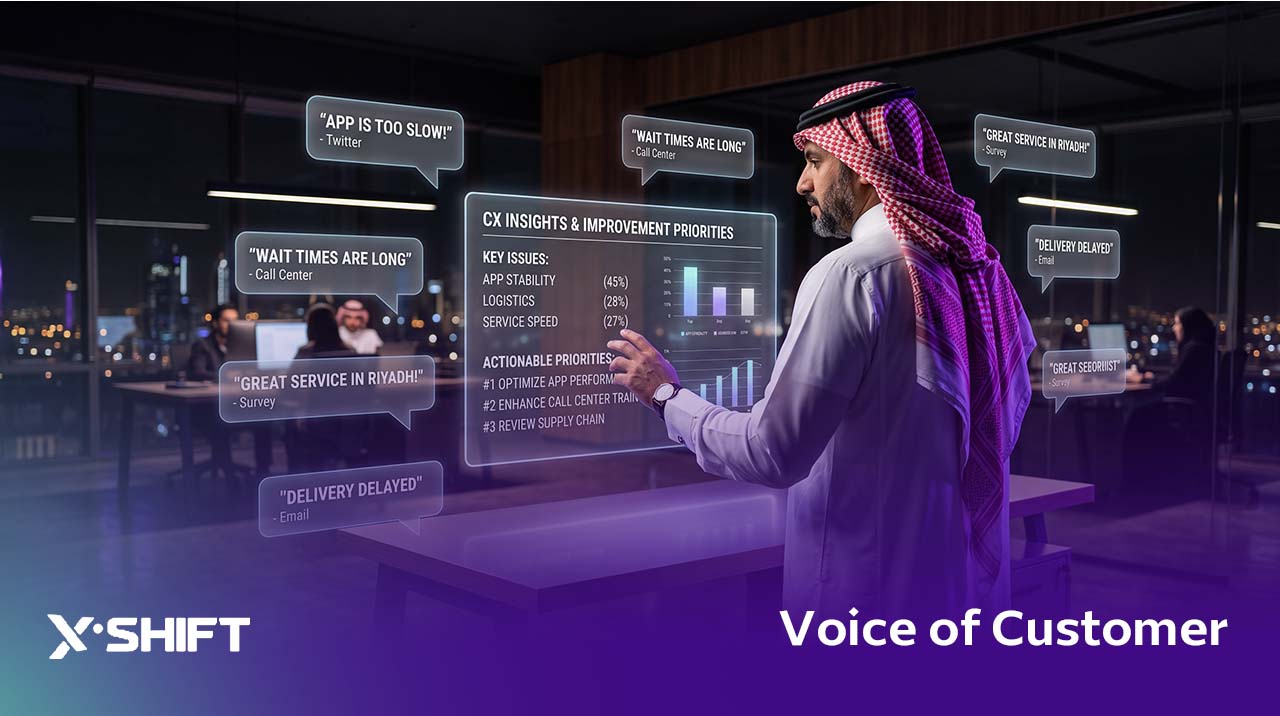
Customers continuously reveal what they expect through surveys, reviews, support conversations, complaints, social media, and everyday interactions with a brand. Voice of Customer gives organizations a structured way to capture these signals and convert them into insights that can improve services, journeys, and decisions. X-Shift helps organizations build this capability through customer experience solutions that combine feedback collection, digital research, sentiment analysis, customer data, and actionable reporting across multiple touchpoints.
What Is Voice of Customer?
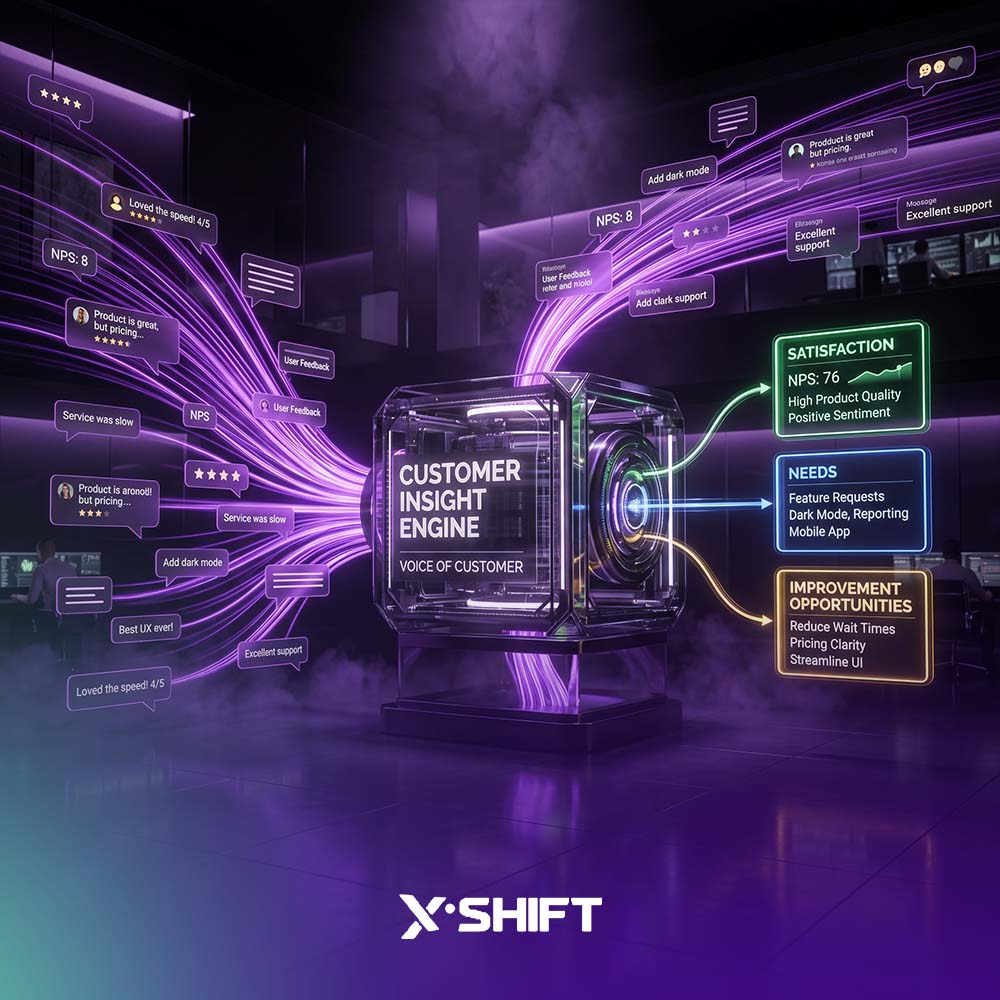
Voice of Customer is the process of collecting, organizing, and analyzing customer needs, expectations, preferences, and perceptions across the customer journey. It helps organizations understand not only what customers say, but also why they say it and where specific problems occur. A strong program connects direct feedback with operational and behavioral data so teams can move beyond assumptions and make improvements based on evidence, which is why integrated solutions like voc voe and research play a critical role.

Understanding Customer Needs and Expectations
Voice of Customer helps teams identify what customers value most, what frustrates them, and which moments have the greatest influence on satisfaction. This information can come from structured surveys as well as open comments, calls, emails, and digital interactions. When the organization compares feedback across segments and journey stages, it gains a clearer understanding of customer priorities and can design services around real needs rather than internal assumptions.
Turning Feedback Into Actionable Insight
Collecting comments alone does not improve the experience. Voice of Customer becomes valuable when feedback is categorized, analyzed, and connected to specific actions. Organizations can identify recurring themes, measure how often issues appear, and estimate their impact on customer satisfaction or effort. This makes it easier to prioritize changes, assign ownership, and monitor whether the selected improvements actually solve the problems customers are describing.
Why Customer Feedback Matters
Voice of Customer gives organizations a direct connection between customer perception and business improvement. Without a structured listening process, teams may rely on isolated complaints, assumptions, or internal opinions when deciding what to fix first. A consistent program helps reveal patterns across thousands of interactions, making it easier to understand where the customer journey is working well and where friction is damaging satisfaction, loyalty, or trust.
Improving Customer Experience
Voice of Customer helps organizations identify the moments in a journey that create unnecessary effort, confusion, or dissatisfaction. Feedback can reveal issues such as unclear communication, long response times, difficult digital forms, repeated information requests, or inconsistent service between channels. Once these patterns are visible, teams can focus on continuous customer journey optimization, redesign the affected process, and measure whether the experience improves after changes are introduced.
Supporting Better Business Decisions
Customer feedback becomes more useful when it is connected to operational information and strategic priorities. A Voice of Customer program can help leaders compare the impact of different issues and determine which improvements deserve attention first. This reduces the risk of investing in changes that matter internally but have limited customer impact, while giving decision-makers stronger evidence for prioritizing service, product, and process initiatives to improve customer experience overall.
Strengthening Customer Loyalty
Customers are more likely to trust an organization when they see that feedback leads to visible improvement. Voice of Customer helps establish a cycle of listening, responding, and learning instead of treating surveys as one-way data collection. Over time, this approach can strengthen relationships because customers feel that their needs are recognized, while the organization becomes better at preventing recurring problems that could otherwise drive dissatisfaction or attrition.

How Do Organizations Collect Customer Feedback?
An effective Voice of Customer program combines multiple feedback sources rather than relying on a single survey. Different channels reveal different parts of the experience, so organizations need a mix of direct, indirect, and operational signals. The goal is to create a broad view of customer sentiment while avoiding excessive surveying and ensuring that every data source contributes to a specific question or improvement objective.
Surveys and Experience Metrics
Surveys are one of the most direct ways to collect feedback after important interactions such as purchases, service requests, onboarding, or support cases. Voice of Customer programs often use measures such as CSAT, NPS, and CES alongside open-text questions. The numerical score shows the direction of customer perception, while the comments provide context that helps teams understand the reasons behind the rating and identify concrete improvement opportunities.
Contact Center and Support Interactions
Calls, chats, emails, and service tickets contain detailed information about customer problems and expectations. These interactions can reveal issues that customers may never mention in formal surveys. By leveraging advanced call center analytics to examine conversation topics, reasons for contact, repeated complaints, and escalation patterns, organizations can identify operational weaknesses and understand which processes create the greatest burden for customers and service teams.
Social Media, Reviews, and Digital Channels
Customers also express opinions through public reviews, social platforms, website behavior, and other digital channels. Voice of Customer can incorporate these signals to complement direct feedback and identify emerging concerns or sentiment changes. Leveraging targeted strategies such as social listening and sentiment analysis is especially useful when organizations need to understand broader brand perception, monitor recurring themes, or detect issues before they become visible in traditional survey results.
How Can Customer Feedback Data Be Analyzed?
Customer feedback analysis should turn large volumes of structured and unstructured feedback into clear themes, priorities, and actions. Modern programs combine quantitative metrics with text analytics, sentiment analysis, and journey context. Implementing an advanced crm and ticketing framework alongside modern analysis tools makes it possible to move from individual comments to patterns that leadership and operational teams can use, while still preserving the detail needed to understand why customers feel a certain way.
Sentiment and Theme Analysis
Text analytics can group customer comments into themes such as service speed, product quality, billing, digital usability, or employee behavior. Advanced AI applications, including arabic first conversational ai, can enhance Voice of Customer analysis by using sentiment to distinguish positive, neutral, and negative reactions within those themes. This helps teams understand not only how often a topic appears but also the emotional tone associated with it, making it easier to identify high-impact pain points and positive practices worth expanding.
Segment and Journey Analysis
Different customers may experience the same service in very different ways. Voice of Customer data can be segmented by customer type, channel, product, location, or journey stage to reveal these differences. This prevents broad averages from hiding important problems. For example, overall satisfaction may appear stable while a specific digital journey or customer segment shows a significant decline that requires targeted investigation and improvement.
Closing the Feedback Loop
A mature Voice of Customer program does more than produce dashboards. It creates a process for assigning issues, responding to customers when appropriate, tracking improvement initiatives, and measuring results. Deploying contact center qa software helps ensure that closing the loop delivers accountability and consistent service, ensuring that feedback reaches the teams capable of acting on it rather than being treated as a simple reporting exercise.
How X-Shift Supports Customer Listening Programs
X-Shift supports Voice of Customer programs as part of its broader customer experience portfolio, combining customer and employee feedback, digital research, analytics, sentiment capabilities, and multi-channel experience solutions. This allows organizations to collect customer signals from different sources and connect them with operational insights, helping teams understand what customers are experiencing and translate that understanding into more focused improvement initiatives.
Multi-Channel Feedback and Research
X-Shift helps organizations collect structured and unstructured feedback across multiple touchpoints, including surveys and digital research, often integrated with an omnichannel customer contact centre. A customer listening approach built around multiple channels provides a more balanced view than relying on one source alone. Organizations can compare feedback from different audiences, identify recurring patterns, and build a more complete picture of customer expectations, employee perspectives, and service performance across the wider experience ecosystem.
Sentiment Analysis and Actionable Insights
X-Shift also supports analysis that helps organizations identify themes, sentiment, and patterns within customer feedback. Incorporating solutions like voice and chat bots can capture real-time customer data at scale, making Voice of Customer information easier to interpret. By turning raw feedback into structured insight, teams can focus on the issues with the greatest impact and connect improvement priorities with measurable customer experience outcomes.
How to Build an Effective Customer Listening Program
A successful Voice of Customer program requires clear objectives, appropriate listening points, reliable analysis, and strong ownership of improvement actions. Aligning these initiatives with a comprehensive digital transformation strategy ensures that feedback directly influences business processes. Organizations should avoid collecting feedback without knowing how it will be used; instead, every survey, metric, or listening channel should support a business question, customer journey decision, or service improvement goal.
Define What You Need to Learn
Before launching surveys or analytics, teams should define the decisions the program is expected to support. They may need to understand why customers abandon a digital customer experience, why support contacts are increasing, or which service improvements would have the greatest impact. Evaluating your capabilities through a digital readiness assessment helps guide the selection of channels, metrics, and customer segments, making the feedback program more useful and preventing the organization from collecting large volumes of data without a clear purpose.
Connect Insights to Owners and Actions
Every important finding should have a responsible team and a defined next step. Customer experience teams can identify themes, but product, operations, technology, or service teams may need to make the actual change. Modern organizations often leverage ai automation for business to streamline this routing process. Establishing ownership helps prevent insights from remaining in dashboards without action, while ensuring that planned improvements are completed and evaluated post-implementation.
Measure Improvement Over Time
The value of customer listening appears when organizations can show that the experience is improving. Teams should compare key metrics, feedback themes, complaint levels, and operational indicators before and after changes. Check our latest blogs and updates to learn how continuous measurement helps programs evolve as customer expectations, services, and channels change over time.
For organizations seeking to understand customers more deeply and turn feedback into measurable improvement, X-Shift can help build a Voice of Customer capability that connects listening, analysis, insight, and action across the customer journey. You can learn more about our company background and solutions or contact our experts to get started.