
Integrated CX Platform & AI Customer Solutions in KSA
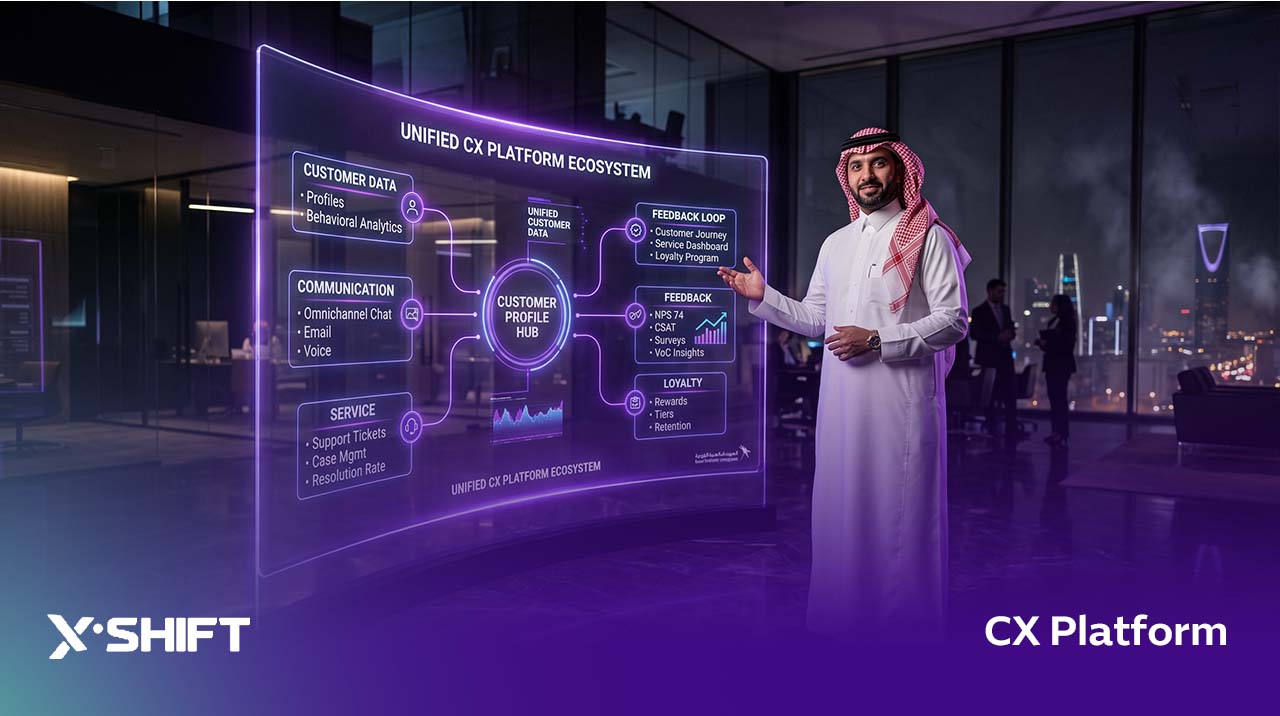
Customer expectations are shaped by every interaction with a brand, from a website visit and a chatbot conversation to a support call or service request. A CX Platform helps organizations connect these touchpoints, customer data, service workflows, and experience insights in one coordinated environment. X-Shift supports businesses with an integrated customer experience ecosystem that combines Voice of Customer, social listening, knowledge management, omnichannel contact centers, voice and chat bots, CRM, and ticketing to create more connected customer journeys.
What Is a CX Platform?
A CX Platform is a technology environment designed to help organizations manage, understand, and improve customer interactions across multiple channels and stages of the journey. Instead of operating separate tools for feedback, customer support, CRM, knowledge, and communication, the platform creates stronger connections between them. This gives teams better context, reduces fragmented experiences, and creates a more consistent foundation for customer service and experience improvement.
Connecting Customer Data and Interactions
The platform brings customer information and interaction history closer together so employees can understand what has already happened before responding to a new request. This may include previous support cases, survey feedback, communication history, preferences, and other relevant context. Better access to connected information helps reduce repeated questions, improves continuity between teams, and gives employees a clearer view of the customer relationship across multiple touchpoints.
Coordinating Multiple Customer Channels
Customers may move between phone, email, web chat, mobile applications, messaging platforms, and social channels during the same journey. The platform helps organizations coordinate these interactions so each channel is not treated as a separate experience. When context follows the customer, service teams can continue conversations more smoothly, reduce duplicated effort, and provide a more consistent response regardless of where the customer chooses to engage.

Why Do Organizations Need a CX Platform?
A CX Platform becomes especially valuable as customer journeys grow more complex and organizations add more digital channels and service technologies. Without integration, teams may work with incomplete information, customers may repeat the same details, and managers may struggle to understand the full experience. A coordinated platform reduces these gaps by connecting customer engagement, operational workflows, and experience measurement within a broader customer-centric model.
Improving Customer Experience Consistency
The platform helps organizations provide more consistent service by giving employees access to shared information, approved knowledge, and connected workflows. Customers are less likely to receive conflicting answers when teams are working from the same context and policies. This consistency matters across both digital and human-assisted interactions, especially when a customer moves from self-service to an agent or from one department to another during a single issue.
Reducing Customer Effort
Customers often become frustrated when they need to repeat information, contact multiple departments, or switch between disconnected systems. The platform can reduce this effort by linking channels, customer records, support cases, and knowledge. The goal is to make the journey easier rather than simply adding more digital options. When the process is connected behind the scenes, customers can move through service interactions with fewer unnecessary steps and delays.
Supporting Better Team Productivity
A connected environment also helps employees work more efficiently. Instead of searching across several applications for customer information, procedures, or ticket history, teams can access relevant context more quickly. The platform can also support automation for routing, notifications, ticket updates, and common service tasks. This reduces repetitive administration and allows employees to spend more time resolving complex issues and engaging with customers.
What Are the Core Components of a CX Platform?
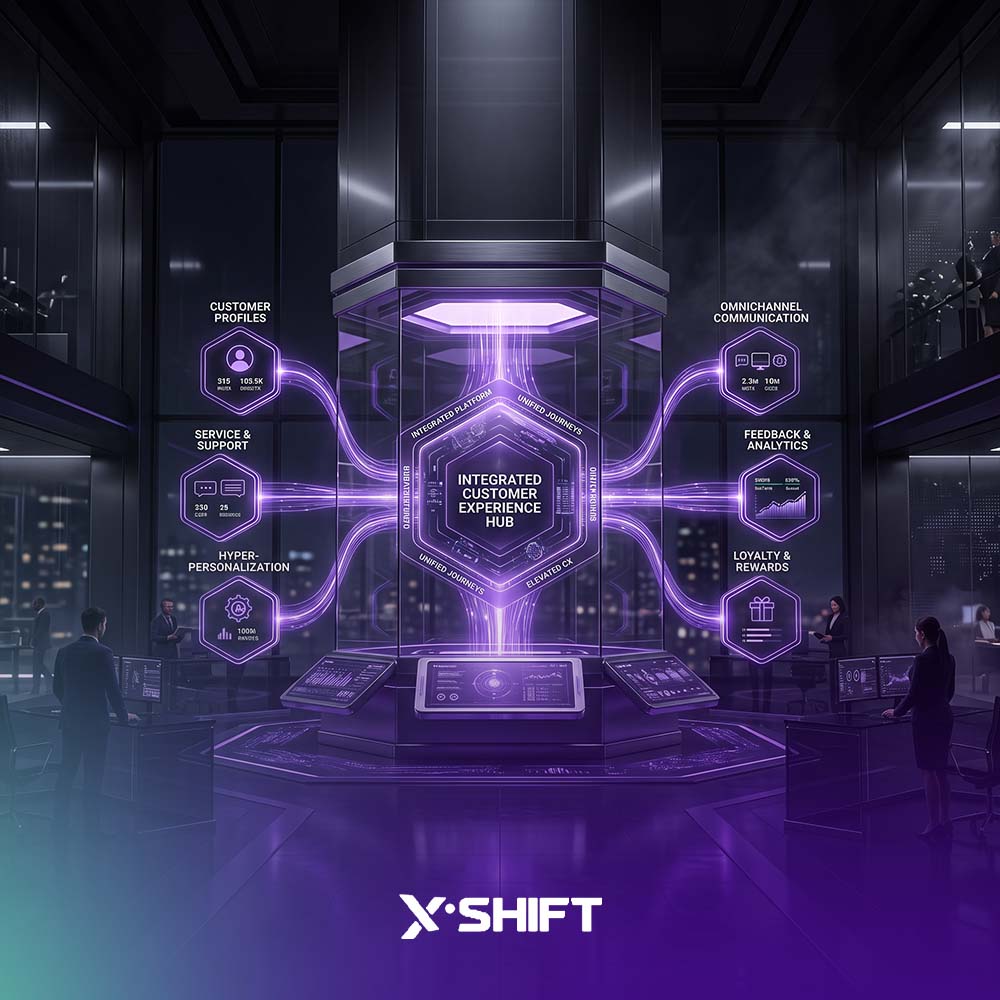
The strongest customer experience environments combine several capabilities rather than relying on one system. A CX Platform may include customer feedback, CRM, ticketing, omnichannel communication, knowledge management, conversational AI, analytics, and social listening. The exact configuration depends on the organization’s operating model, but the objective remains the same: connect customer insight with service delivery and create a clearer view of the end-to-end journey.
Voice of Customer and Experience Feedback
A CX Platform can include Voice of Customer capabilities that collect surveys, ratings, open comments, and other forms of feedback across important moments in the journey. This helps organizations understand satisfaction, effort, expectations, and recurring pain points. When feedback is linked to customer interactions and service data, teams can move beyond isolated scores and identify the operational issues that are most likely to affect loyalty, trust, and future behavior.
CRM and Ticketing
CRM and ticketing are important because they connect customer identity with requests, complaints, and service history. A CX Platform can use these capabilities to give employees a unified view of the customer while organizing each case through classification, assignment, escalation, and resolution. Implementing a CRM & Ticketing system improves accountability and makes it easier to track how customer issues are handled from the first contact until the final outcome.
Knowledge Management
Knowledge management gives customer-facing teams access to approved procedures, FAQs, policies, troubleshooting guidance, and other operational information. Within a CX Platform, knowledge can support agents, chatbots, self-service portals, and digital channels using a more consistent source of information. This reduces variation in responses, improves the speed of service, and helps organizations preserve institutional knowledge instead of relying heavily on individual employees.
Omnichannel Contact Center and Conversational AI
A CX Platform can connect contact center interactions with voice bots, chatbots, digital messaging, and human agents. Implementing an omnichannel customer contact centre allows automation to handle suitable requests while preserving the ability to transfer complex cases to employees with relevant history and context. The result is a more flexible support model where leveraging conversational AI ensures customers can use different channels without losing continuity or restarting the conversation every time the interaction changes.

How Does a CX Platform Improve Customer Insights?
The platform creates value not only by managing interactions but also by bringing together data that helps organizations understand the customer journey. Feedback, service requests, communication history, operational metrics, and sentiment can reveal patterns that would be difficult to identify in isolated systems. These insights can support more focused improvement initiatives and help leaders prioritize changes according to actual customer impact rather than assumptions.
Combining Feedback With Operational Data
Survey results can tell an organization that customers are dissatisfied, but operational data may explain why. By connecting feedback with ticket history, response time, contact frequency, channel usage, or service outcomes, teams can identify the factors behind the score. Leveraging VOC to generate customer feedback creates a stronger basis for root-cause analysis and allows customer experience teams to recommend specific operational changes instead of producing reports that only describe customer sentiment.
Identifying Journey Friction
Customer journey friction can appear in many forms, such as repeated contacts, abandoned processes, long waits, transfers between departments, or inconsistent information. A CX Platform helps combine these signals so teams can identify which stages create the greatest effort. Once the problem is visible, organizations can focus on customer journey optimization, redesign the process, improve knowledge, automate repetitive steps, or change routing rules, then measure whether the customer experience improves.
Enabling More Personalized Engagement
Connected customer data can help organizations understand context and deliver interactions that are more relevant to individual needs. A CX Platform may support personalization by using history, preferences, feedback, and previous service activity to inform communication and support. Delivering an exceptional digital customer experience requires that personalization follows appropriate governance and privacy controls, but when used responsibly it can reduce unnecessary questions and make each interaction feel more informed and useful.
How Should Organizations Choose the Right CX Platform?
Choosing a CX Platform should begin with customer journeys and business requirements rather than a long feature checklist. Organizations need to understand which channels are most important, where data currently sits, which processes create friction, and what outcomes they want to improve. Defining a clear digital transformation strategy ensures the best solution fits the existing environment, integrates with critical systems, and remains flexible enough to support future growth and new service models.
Evaluate Integration Capabilities
Integration is essential because customer experience depends on data and workflows that often exist across multiple systems. A strong platform should connect with CRM, service management, contact center, knowledge, analytics, and other relevant tools without forcing the organization to rebuild everything. Good integration reduces duplicated data, improves visibility, and allows teams to preserve investments in systems that still provide value.
Consider Scalability and Flexibility
Customer volumes, service channels, and business requirements can change over time. The selected environment should be able to support additional users, channels, automation, and integrations without becoming difficult to manage. Evaluating your company via a digital readiness assessment helps ensure a scalable model that allows the organization to expand capabilities gradually as customer experience maturity increases.
Prioritize Security and Governance
Customer experience systems can contain sensitive personal information, interaction history, and service data. Organizations should therefore evaluate access controls, data protection, deployment options, auditability, and governance requirements when choosing a platform. Clear ownership of data and customer experience processes is equally important, because technology alone cannot create consistency if teams use different definitions, policies, or service standards.
How X-Shift Supports CX Platform Capabilities
X-Shift delivers an integrated customer experience portfolio through its CX solutions that support the core capabilities organizations expect from a CX Platform. Its services include Voice of Customer and employee feedback, social listening, knowledge management, omnichannel contact center solutions, voice and chat bots, CRM, and ticketing. By connecting these capabilities, organizations can build a customer experience environment that supports listening, service delivery, automation, customer context, and continuous improvement.
Voice of Customer and Social Listening
X-Shift helps organizations capture customer and employee feedback, conduct digital research, analyze sentiment, and monitor conversations across digital and social channels. Using advanced tools for call center analytics provides a broader understanding of what customers are saying, how they feel, and which topics are affecting perception. The insights can then be used to identify opportunities for service improvement, experience recovery, and more focused customer engagement.
Knowledge, Contact Center, and AI Interaction
X-Shift combines knowledge management with omnichannel contact center and Agentic AI capabilities. Organizations can give agents faster access to approved information while using voice and chat bots for suitable automated interactions. Utilizing tools like contact center QA software ensures that when these capabilities work together, customers receive faster responses, and human agents can focus on conversations that require judgment, empathy, or specialized expertise.
CRM and Ticketing Integration
X-Shift also supports CRM and ticketing capabilities that centralize customer records and organize service requests through trackable workflows. Implementing automated quality monitoring creates a stronger operational connection between customer information and issue resolution. Teams can manage assignments, follow-ups, and ticket status while using the wider customer experience ecosystem to maintain context across channels and improve customer experience consistency.
For organizations looking to connect customer feedback, communication channels, service workflows, knowledge, and customer data, X-Shift provides the solutions needed to build a CX Platform that supports more consistent experiences, better operational visibility, and a scalable path toward digital CX transformation.