
Digital Transformation Solutions: Turning Technology into Business Value
Organizations are under growing pressure to improve efficiency, respond faster to customers, use data more effectively, and adapt to continuous technological change. X-Shift helps enterprises address these priorities through digital transformation solutions that connect strategy, enterprise architecture, data governance, process improvement, digital applications, and maturity assessment. Instead of treating modernization as a series of isolated technology projects, this approach helps organizations build a coordinated roadmap that supports measurable business outcomes and long-term digital growth.
What Are Digital Transformation Solutions?
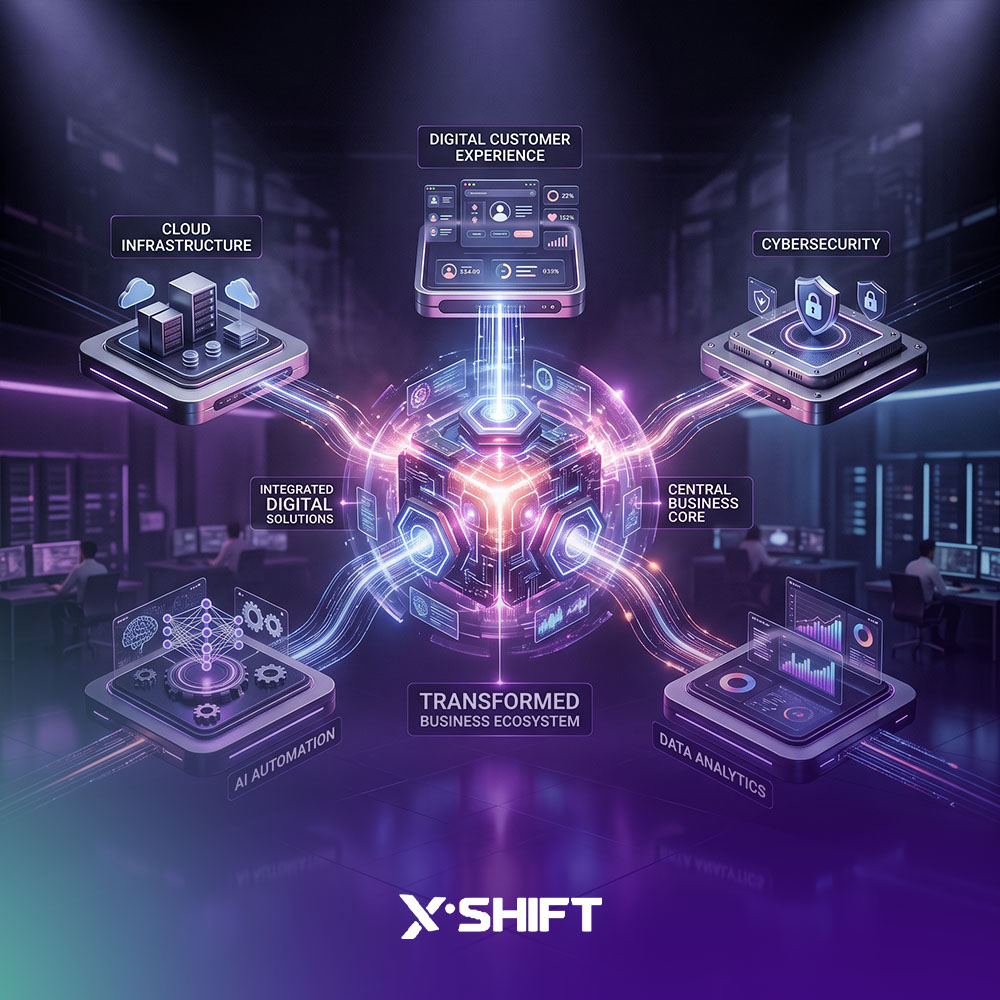
Digital transformation solutions are technologies, frameworks, services, and operating practices that help organizations redesign how they work and deliver value. They can include process automation, digital applications, enterprise architecture, data governance, cloud capabilities, analytics, artificial intelligence, and digital maturity programs. Their purpose is not simply to replace manual activities with software, but to create a more connected operating model in which technology supports strategic goals, better decisions, and improved user experiences.

Business and Technology Alignment
The strongest digital transformation solutions begin with business priorities rather than software selection. Organizations first need to define the outcomes they want, such as reducing service time, improving productivity, increasing digital adoption, or strengthening compliance. Technology can then be selected and configured around those objectives. This alignment reduces fragmented investment and helps leadership evaluate whether each initiative is producing meaningful operational value instead of merely adding another platform to the technology environment.
Process Redesign and Automation
Modernization is most effective when organizations review the process before automating it. Digital transformation solutions can help identify unnecessary approvals, duplicate data entry, manual handoffs, and delays that create friction for employees or customers. Once the workflow is simplified, automation can handle repetitive tasks such as routing, notifications, validation, and status updates. This combination improves speed and consistency while allowing employees to focus on work that requires expertise, judgment, and human interaction.
Connected Digital Experiences
Customers and employees increasingly expect simple, consistent digital journeys. Well-designed digital transformation solutions connect front-end channels with the systems, data, and workflows behind them, reducing the need to repeat information or move between disconnected processes. This creates a smoother experience while giving service teams more context. It also helps organizations maintain consistent information across websites, applications, contact centers, and internal operational systems.
Why Do Organizations Need Digital Transformation Solutions?
Businesses often accumulate systems, manual workarounds, and separate data sources as they grow. Over time, this can slow decision-making and make new services harder to launch. Digital transformation solutions provide a structured way to address these challenges by improving integration, simplifying operations, and creating stronger digital foundations. The result is an organization that can respond more quickly to market changes while controlling complexity and maintaining governance.
Improve Operational Efficiency
Digital transformation solutions can reduce the time spent on repetitive work, eliminate unnecessary steps, and improve the flow of information between departments. Automation and system integration allow teams to process requests faster and with fewer errors. The benefit is not only lower administrative effort; employees gain more time for analysis, innovation, customer engagement, and other activities that contribute directly to business performance and service quality.
Strengthen Data-Driven Decision Making
Reliable data is essential for effective management. Digital transformation solutions can improve how information is collected, governed, integrated, and analyzed so decision-makers are not dependent on inconsistent spreadsheets or delayed reports. With better data quality and clearer ownership, organizations can build dashboards, identify trends, compare performance, and use advanced analytics with greater confidence. This creates a stronger basis for planning and continuous improvement.
Increase Organizational Agility
Markets, regulations, customer expectations, and technologies can change quickly. Digital transformation solutions help organizations build more adaptable processes and scalable platforms, making it easier to introduce new services, modify workflows, or respond to increased demand. A flexible digital foundation reduces dependence on rigid systems and manual procedures, enabling the organization to evolve without rebuilding its operating environment every time requirements change.
What Are the Core Components of Digital Transformation?
A successful transformation program combines several capabilities rather than relying on a single platform. The overall approach should address the relationship between strategy, processes, applications, data, technology, governance, and people. When these components are managed together, organizations can reduce duplication and create a clearer path from business objectives to implementation. This also improves the ability to measure progress and identify gaps before they become long-term obstacles.
Enterprise Architecture
Enterprise architecture provides a structured view of how business capabilities, processes, applications, data, and technology fit together. Within a transformation program, architecture helps organizations identify duplication, understand dependencies, and guide investment decisions. It can also support interoperability and long-term scalability by ensuring that new systems fit into a coherent target environment rather than becoming isolated platforms that create additional integration challenges later.
Data Governance
Transformation depends on data that is accurate, accessible, protected, and clearly owned. A strong transformation framework should therefore include governance practices that define data responsibilities, quality rules, classifications, access controls, and lifecycle requirements. Strong governance supports trustworthy reporting and creates a more reliable foundation for analytics, automation, and artificial intelligence. It also helps organizations reduce inconsistent definitions and duplicated information across departments.
Digital Applications
Custom applications and modern digital platforms can improve customer journeys, employee workflows, and service delivery when they are designed around real operational needs. These platforms should connect with back-end systems and data rather than creating new digital silos. The most effective applications simplify tasks, reduce unnecessary steps, and provide users with intuitive access to the services and information they need.
How Do Digital Transformation Solutions Support Customer Experience?
Customer experience often reveals whether transformation is working in practice. A new system may be technically advanced, but if customers still face repeated questions, long waits, or disconnected channels, the underlying journey has not improved. Digital transformation solutions can help connect customer data, service channels, workflows, and analytics so organizations can deliver faster and more consistent interactions across the full relationship.
Omnichannel Service Delivery
Customers may move between websites, mobile applications, email, chat, and contact centers during a single journey. Digital transformation solutions can connect these channels so customer context is preserved as the interaction moves from one touchpoint to another. This reduces repetition and gives employees a more complete view of what has already happened, making it easier to provide relevant support and maintain a consistent service experience.
Personalized Interactions
When customer data is governed and connected, organizations can better understand preferences, service history, and previous interactions. Integrated digital capabilities make it possible to use this context to provide more relevant communication, recommendations, or support. Personalization should still respect privacy and governance requirements, but when applied appropriately it can reduce customer effort and make digital journeys feel more responsive to individual needs.
Faster Service Resolution
Automation, integrated data, and clearer workflows can shorten the time between a customer request and its resolution. Modern digital platforms may automatically classify requests, route them to the right team, provide employees with relevant information, or allow customers to complete common tasks through self-service. This improves speed while reducing pressure on service teams, especially when transaction volumes are high or support is required across multiple channels.
How Can Organizations Choose the Right Approach?
Selecting digital transformation solutions should begin with a clear understanding of business problems, digital maturity, and organizational constraints. Buying technology first can create additional complexity if processes, data, governance, or integration requirements have not been considered. A structured assessment helps organizations define priorities, identify dependencies, and build a roadmap that combines quick improvements with the foundational work required for sustainable transformation.
Assess Digital Maturity
A maturity assessment identifies strengths and gaps across areas such as strategy, governance, technology, data, processes, and user experience. This gives the organization a baseline from which to plan improvement. It also helps distinguish between visible symptoms and underlying capability gaps. By understanding the current state, leaders can sequence initiatives more realistically and avoid launching projects that depend on capabilities the organization has not yet established.
Prioritize Business Value
Transformation roadmaps should prioritize initiatives according to expected impact, feasibility, risk, compliance requirements, and dependencies. Rather than attempting to transform everything at once, organizations can focus on areas where improvement will create measurable value. This may include a high-volume process, a critical customer journey, a data quality issue, or a regulatory requirement. Clear prioritization also makes it easier to allocate budget and executive attention.
Measure Progress Continuously
Every initiative should have defined outcomes and indicators before implementation begins. These may include process completion time, automation rates, user satisfaction, digital adoption, data quality, operating cost, or service availability. Continuous measurement helps organizations determine whether investments are producing the intended results. It also makes it easier to identify underperforming initiatives and adjust the roadmap as business conditions or technology opportunities evolve.
How X-Shift Delivers Digital Transformation Solutions
X-Shift provides digital transformation solutions designed to connect assessment, governance, architecture, data, applications, and process improvement within one transformation approach. Its services include support for Qiyas, compliance with standards and regulatory frameworks, enterprise architecture development using established methodologies, data governance, digital applications, and organizational process optimization. This combination helps organizations move from identifying transformation gaps to implementing practical improvements that can be monitored over time.
Digital Maturity and Qiyas Readiness
X-Shift supports organizations in assessing maturity, understanding requirements, identifying gaps, and building improvement plans. This creates a structured foundation for transformation by showing where the organization stands and what should be addressed first. A maturity-led approach also helps teams assign responsibilities, organize evidence, track progress, and maintain readiness rather than treating assessment as an isolated activity conducted only when a formal review approaches.
Enterprise Architecture and Data Governance
X-Shift helps organizations develop enterprise architecture and establish data governance practices that support more coordinated transformation. Architecture provides visibility into how capabilities, systems, and information relate, while governance strengthens data ownership, quality, security, and use. Together, these capabilities reduce fragmentation and create a stronger foundation for integration, analytics, artificial intelligence, automation, and future digital services.
Process Optimization and Digital Applications
X-Shift combines process analysis with digital application development so organizations can improve how work is performed before introducing or expanding technology. This approach helps remove unnecessary steps, define clearer workflows, automate suitable activities, and design digital experiences around real user needs. It also reduces the risk of digitizing inefficient processes without addressing the root causes of delay or complexity.
Why Choose X-Shift?
Organizations need more than technology implementation to create sustainable change. X-Shift combines transformation capabilities with customer experience, AI, and managed services, allowing technology initiatives to be viewed in the wider context of operations and service delivery. Its transformation services can be tailored around organizational requirements, helping teams build a practical roadmap that supports current priorities while creating the governance and flexibility needed for future growth.
Integrated Transformation Capabilities
X-Shift brings together maturity assessment, compliance, enterprise architecture, data governance, process optimization, and digital applications. This integrated model helps reduce the gaps that can appear when each capability is managed as a separate initiative. It also provides leadership with a clearer connection between strategic goals, transformation projects, operational improvements, and the digital foundations needed to support long-term innovation.
Scalable and Business-Focused Approach
Transformation priorities change as organizations grow, regulations evolve, and new technologies become available. X-Shift focuses on building solutions that can adapt to these changes rather than solving only an immediate technical requirement. By connecting implementation with business outcomes, organizations can improve their ability to scale services, introduce automation, strengthen governance, and make better use of data without creating unnecessary complexity.
For organizations seeking to modernize operations, improve customer journeys, strengthen data practices, and build a scalable digital foundation, X-Shift provides digital transformation solutions that connect strategy with execution and turn technology investment into measurable, sustainable business improvement.