
Digital Maturity Assessment & Readiness in Saudi Arabia
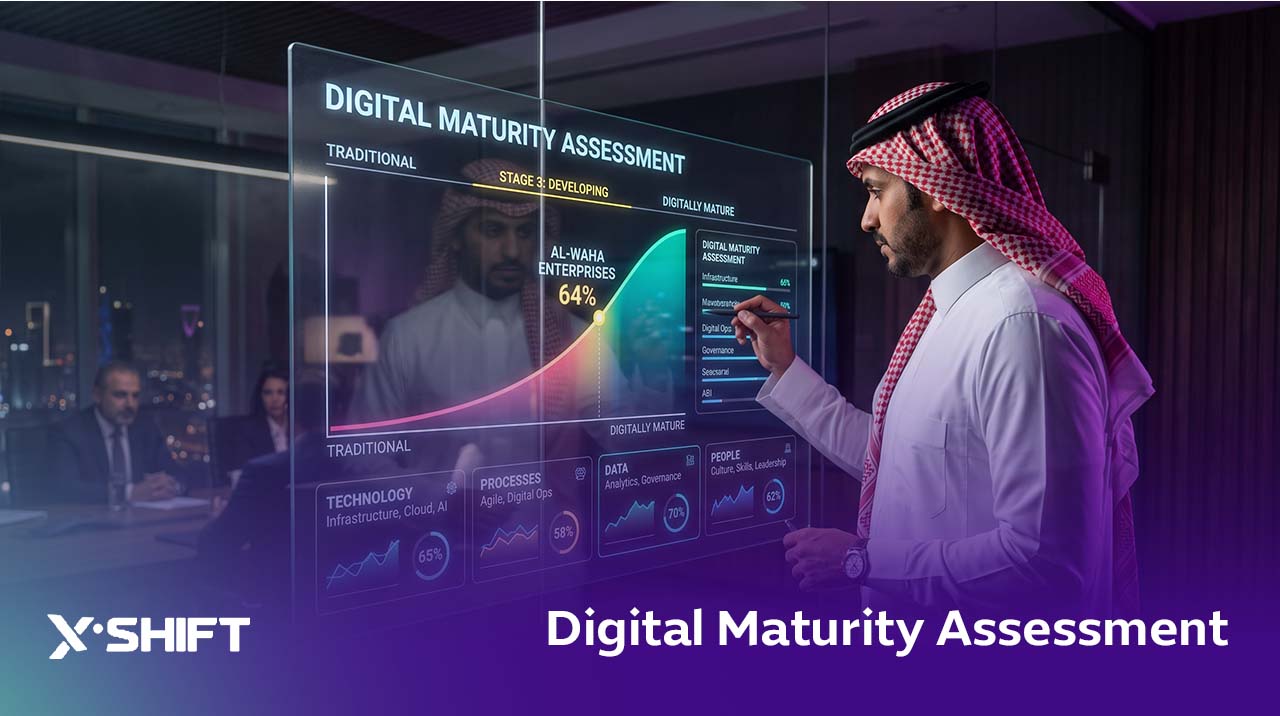
Digital transformation succeeds when organizations understand where they are today, where they want to go, and which capabilities must improve along the way. A Digital Maturity Assessment provides that clarity by evaluating strategy, governance, technology, data, processes, and user experience against defined maturity goals. X-Shift helps organizations turn this evaluation into a practical improvement roadmap through X-Qiyas, digital transformation consulting, enterprise architecture, data governance, process optimization, and structured readiness programs.
What Is a Digital Maturity Assessment?
A Digital Maturity Assessment is a structured evaluation of an organization’s current digital capabilities and readiness for future transformation. It goes beyond reviewing software and infrastructure by examining how effectively digital practices are embedded across leadership, operations, data management, governance, customer or beneficiary services, and organizational culture. The result is a clear baseline that helps leadership understand strengths, weaknesses, dependencies, and areas requiring focused investment.

Establishing a Clear Digital Baseline
The first value of a Digital Maturity Assessment is visibility. Organizations often run multiple technology initiatives without having a unified view of how mature their overall digital environment has become. A structured baseline brings processes, systems, governance practices, data capabilities, and service models into one evaluation, allowing decision-makers to see what is working, where duplication exists, and which foundational capabilities still need development before larger transformation initiatives can succeed.
Identifying Gaps and Improvement Priorities
A Digital Maturity Assessment helps convert broad transformation ambitions into specific improvement areas. Instead of treating every weakness as equally urgent, the organization can classify gaps according to business impact, regulatory importance, operational risk, and dependency on other capabilities. This makes prioritization more practical and helps teams direct budgets and resources toward changes that can create the greatest improvement in service quality, efficiency, governance, and long-term digital readiness by leveraging a comprehensive digital readiness assessment.
Why Is a Digital Maturity Assessment Important?
A Digital Maturity Assessment gives leaders an evidence-based view of progress rather than relying on assumptions or isolated project success. An organization may have modern applications while still struggling with data quality, fragmented processes, unclear governance, or weak integration. By examining maturity across connected areas, the assessment reveals whether digital investments are producing a coordinated operating model or simply adding more technology to an already complex environment.
Connecting Digital Investment to Business Value
A Digital Maturity Assessment helps organizations understand whether current digital initiatives support measurable business and service outcomes. Leaders can compare technology spending with improvements in processing time, service accessibility, automation, user satisfaction, data quality, or operational resilience. This connection makes investment decisions more disciplined and reduces the risk of continuing projects that consume resources without addressing the organization’s most important transformation goals.
Supporting Better Transformation Planning
A Digital Maturity Assessment provides a stronger foundation for roadmap development because it identifies both immediate opportunities and longer-term dependencies. For example, an organization may want to expand agentic AI or advanced robotics, but weak data governance or fragmented information could limit success. By recognizing these dependencies early, leadership can sequence initiatives more realistically through a clear digital transformation strategy and build the capabilities needed for sustainable transformation instead of pursuing advanced technology before the underlying foundation is ready.
Core Areas Evaluated in Digital Maturity
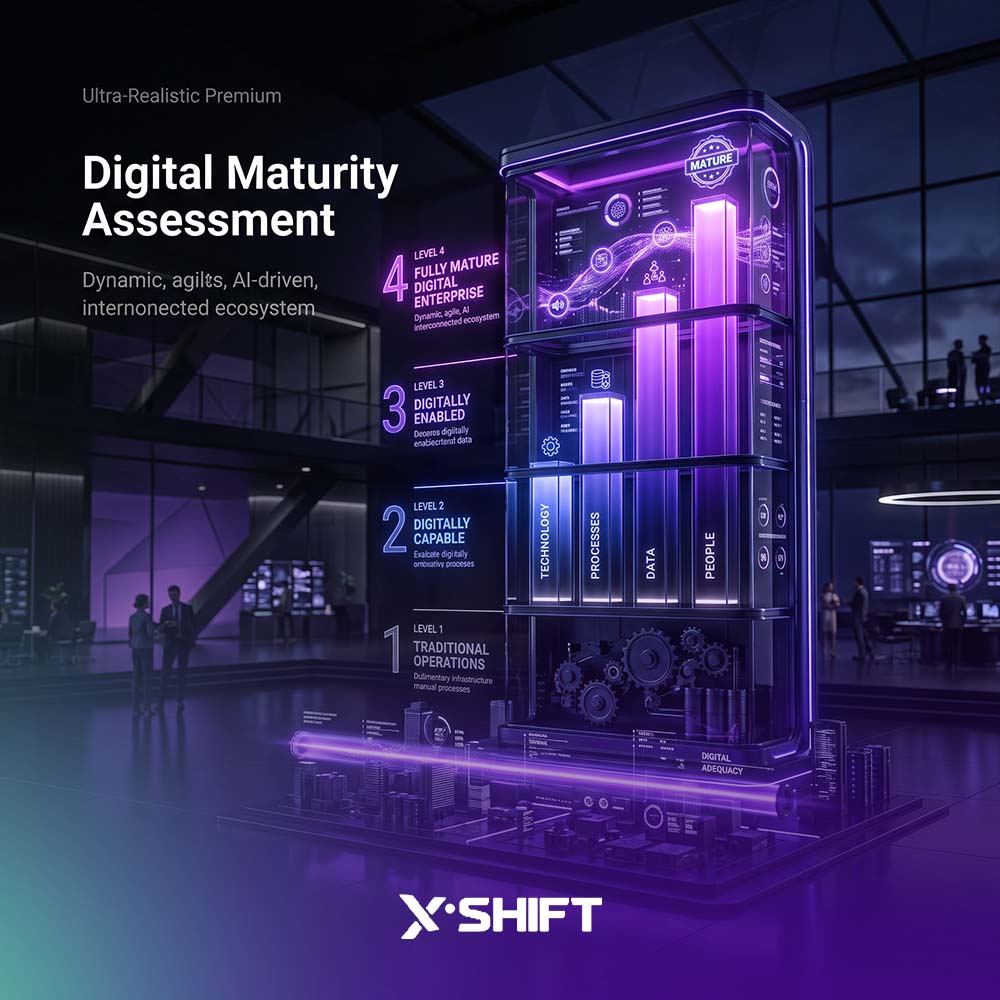
A meaningful Digital Maturity Assessment should examine the organization as an interconnected system rather than focusing on one technology domain. Strategy, governance, data, architecture, processes, digital services, people, and measurement all influence the ability to transform successfully. Reviewing these areas together helps organizations understand why a weakness in one capability can slow progress elsewhere and creates a more balanced view of overall readiness.
Strategy and Governance
A Digital Maturity Assessment reviews whether digital objectives are connected to organizational strategy, whether responsibilities are clearly assigned, and whether governance mechanisms exist to guide investment and execution. Strong governance helps prevent duplicated initiatives, inconsistent decisions, and unclear accountability. It also creates a framework for prioritizing digital programs, monitoring progress, managing risks, and ensuring that transformation remains aligned with business priorities instead of being driven only by individual technology projects.
Data and Enterprise Architecture
A Digital Maturity Assessment also examines how well data, applications, and technology components are structured and governed. Mature organizations typically have clearer data ownership, stronger quality controls, better integration, and an enterprise architecture that connects business capabilities with systems and information. These foundations improve reporting and interoperability while making it easier to introduce analytics, AI automation for business, artificial intelligence, and new digital services without creating additional silos.
Processes and Digital Services
A Digital Maturity Assessment evaluates whether processes are still heavily manual, duplicated, or dependent on fragmented handoffs, and whether digital services are designed around user needs. Mature transformation is not achieved by converting inefficient paper processes into electronic versions. Organizations need to simplify workflows through strategic customer journey optimization, automate suitable activities, integrate channels, and measure whether digital services actually reduce effort, improve completion times, and elevate the overall digital customer experience.

How to Conduct a Digital Maturity Assessment Effectively
A Digital Maturity Assessment should follow a repeatable methodology that moves from evidence collection to scoring, gap analysis, prioritization, and roadmap development. The goal is not simply to produce a maturity score. The evaluation should explain why the organization is at its current level, what is preventing further progress, and which actions can create measurable improvement. Clear ownership and periodic reassessment are essential for turning findings into sustained results.
Collect Evidence From Multiple Functions
A Digital Maturity Assessment is more reliable when it combines documentation, interviews, system information, process evidence, performance indicators, and input from different business functions. Transformation is rarely owned by one department, so the assessment should capture perspectives from strategy, technology, data, operations, customer experience, governance, and other relevant teams. This reduces bias and provides a more realistic picture of how digital capabilities operate across the organization in practice.
Turn Findings Into a Prioritized Roadmap
A Digital Maturity Assessment becomes valuable when findings are translated into clear actions. Each major gap should have an improvement initiative, responsible owner, expected outcome, timeline, and performance measure. Priorities should consider impact, urgency, effort, dependencies, and regulatory requirements. This creates a roadmap that leadership can actively manage and allows the organization to track whether maturity is increasing as projects are completed rather than repeating the same assessment without meaningful change.
How X-Shift Supports Digital Maturity Assessment
X-Shift supports Digital Maturity Assessment programs by combining expert advisory services with digital maturity assessment platform tools and frameworks. The approach helps organizations understand current readiness, identify gaps, organize improvement priorities, strengthen documentation, and monitor progress through structured dashboards. X-Shift also connects maturity findings with broader capabilities such as enterprise architecture, data governance, standards compliance, digital applications, and process optimization, helping organizations move from evaluation to practical transformation.
X-Qiyas Readiness and Gap Analysis
X-Shift helps organizations evaluate their readiness, identify areas that require improvement, and structure the evidence and actions needed to strengthen maturity. Through X-Qiyas, teams can gain a more centralized view of gaps, progress, responsibilities, and improvement plans. This approach reduces dependence on disconnected spreadsheets or periodic manual reviews and gives transformation teams a clearer way to manage readiness as an ongoing program rather than an activity performed only before formal evaluation.
Improvement Planning and Progress Monitoring
X-Shift connects assessment findings with measurable improvement plans so organizations can move from diagnosis to execution. Teams can establish milestones, assign responsibilities, monitor progress, and use visual reporting to understand where maturity is improving and where additional attention is needed. This creates a continuous management cycle in which digital readiness is reviewed, strengthened, and monitored over time rather than treated as a static score that has little connection to day-to-day transformation work.
Why Choose X-Shift for Digital Maturity Programs?
Organizations need more than a maturity score; they need a partner that can help interpret findings and address the underlying gaps. X-Shift combines digital transformation consulting with capabilities in enterprise architecture, data governance, process optimization, compliance, customer experience, and modern managed services. This integrated approach makes it easier to connect maturity findings with real operational initiatives and build a roadmap that supports sustainable improvement.
From Assessment to Implementation
X-Shift helps organizations move beyond diagnostic reports by linking maturity findings to practical transformation initiatives. If an assessment identifies fragmented architecture, weak data governance, inefficient processes, or gaps in digital services, those findings can be connected to specialist workstreams designed to improve the underlying capability, such as adopting specialized digital CX transformation services or modernizing underlying tech stacks using IT modernization services. This reduces the gap between assessment and execution and helps leadership maintain momentum after the initial evaluation is complete.
A Continuous Improvement Approach
Digital maturity changes as technology, regulations, customer expectations, and organizational priorities evolve. X-Shift supports a continuous improvement model that encourages regular reassessment, progress monitoring, and roadmap refinement. Instead of treating maturity as a one-time project, organizations can use the results to build stronger governance habits, track improvement over time, and maintain a clearer view of readiness for future digital initiatives. You can also read our comprehensive report on saudi arabia cx digital transformation market trends 2026 for deeper market insights.
If your organization wants to understand its current digital readiness, prioritize transformation investments, and build a measurable path toward higher maturity, X-Shift can help connect assessment, planning, governance, and implementation within one structured transformation journey.