

The Ultimate Guide to a Successful Digital Transformation Strategy
In today’s fast evolving business environment, organizations are under constant pressure to modernize operations, improve agility, and deliver exceptional customer experiences. This is where a strong Digital Transformation Strategy becomes essential for long term growth and competitiveness. Enterprises across industries are investing heavily in digital technologies to optimize workflows, strengthen operational efficiency, and adapt to changing market expectations.
A successful Digital Transformation Strategy is no longer limited to implementing new software or upgrading infrastructure. It involves a complete organizational shift that integrates technology, data intelligence, automation, and customer centric operations into a unified business framework. With advanced enterprise solutions from x-shift, organizations can develop scalable transformation strategies that support innovation, operational excellence, and sustainable growth.
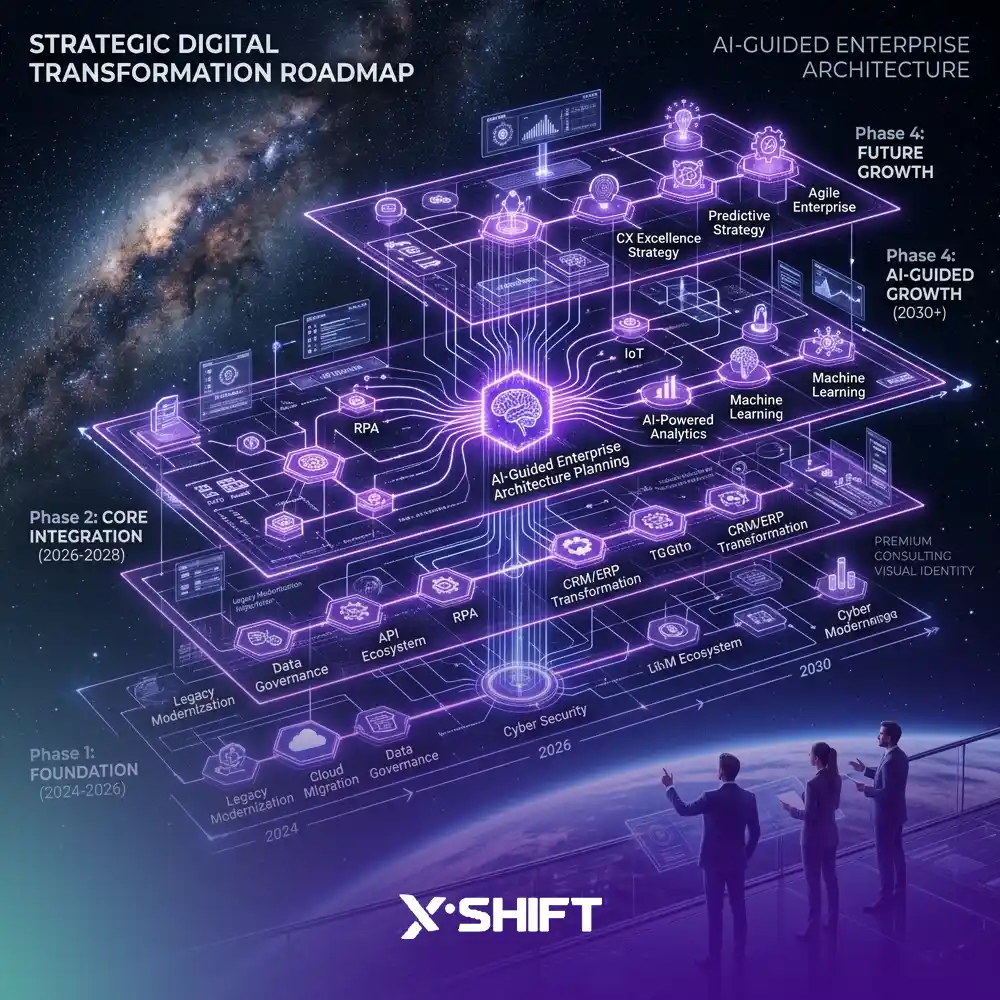
The Importance of a Digital Transformation Strategy
Organizations operating in highly competitive markets must continuously evolve to remain efficient and relevant. A well structured Digital Transformation Strategy allows businesses to modernize operations, improve decision making, and create agile infrastructures capable of supporting future expansion.
Improving Operational Efficiency
Modern enterprises manage increasingly complex operational processes that require intelligent automation and streamlined workflows. A strong Digital Transformation Strategy helps organizations reduce manual tasks, improve execution speed, and optimize productivity across multiple departments. This operational efficiency creates long term business value and supports sustainable growth.
Enhancing Customer Experience
Customer expectations continue to evolve as digital technologies become more advanced and accessible. Businesses implementing a Digital Transformation Strategy can deliver more personalized, responsive, and seamless customer interactions across digital channels. This improves customer satisfaction, loyalty, and long term retention.
Strengthening Business Agility
Organizations must respond quickly to changing market conditions and operational challenges. A scalable Digital Transformation Strategy enables enterprises to adapt rapidly, improve strategic flexibility, and support innovation across all operational environments.
Core Technologies Supporting a Digital Transformation Strategy
The success of digital transformation initiatives depends heavily on the technologies organizations choose to implement. Understanding the technologies behind a Digital Transformation Strategy helps enterprises build future ready operational ecosystems.
Artificial Intelligence and Automation
Artificial intelligence technologies enable businesses to automate repetitive workflows and improve operational intelligence. Organizations implementing a Digital Transformation Strategy use AI systems to improve decision making, optimize customer interactions, and reduce operational complexity across multiple business functions.
Cloud Computing Infrastructure
Cloud technologies provide organizations with scalable operational environments capable of supporting modern digital services and remote accessibility. A strong Digital Transformation Strategy often includes cloud integration to improve flexibility, operational efficiency, and infrastructure scalability.
Advanced Data Analytics
Data analytics tools help organizations transform operational data into actionable business insights. Businesses using a Digital Transformation Strategy can analyze performance metrics, customer behaviors, and market trends more effectively to improve strategic planning and operational outcomes.
How x-shift Supports Digital Transformation Strategy
x-shift provides enterprise focused solutions that help organizations modernize operations and accelerate digital transformation initiatives. Through intelligent technologies and scalable digital services, x-shift supports businesses across multiple industries and operational environments.
Agentic Artificial Intelligence
The Agentic Artificial Intelligence solutions provided by x-shift help enterprises automate workflows, optimize operational processes, and improve customer interactions. These intelligent systems support organizations implementing a Digital Transformation Strategy by increasing efficiency and improving operational responsiveness.
Computer Vision
x-shift offers advanced Computer Vision technologies that allow organizations to analyze visual data, monitor operational environments, and improve decision making processes. These technologies support businesses implementing a Digital Transformation Strategy across sectors such as retail, healthcare, logistics, and manufacturing.
Customer Experience Solutions
The Customer Experience Solutions developed by x-shift help organizations improve customer engagement across digital platforms and communication channels. These integrated systems support a successful Digital Transformation Strategy by delivering personalized and seamless customer interactions.
Digital Transformation Services
x-shift provides Digital Transformation Services that modernize infrastructures, improve operational agility, and support enterprise innovation. These services help organizations implement scalable technologies while maintaining operational continuity and long term flexibility.
Managed Services
The Managed Services offered by x-shift provide continuous operational support, infrastructure monitoring, and system optimization. These services help enterprises maintain stable digital ecosystems while focusing on strategic growth and business transformation.
Key Components of a Successful Digital Transformation Strategy
Organizations seeking sustainable digital growth must build structured transformation frameworks aligned with operational priorities and long term business goals. A successful Digital Transformation Strategy combines technology, leadership, and operational alignment.
Leadership and Organizational Alignment
Executive leadership plays a critical role in driving transformation initiatives and ensuring organizational alignment. Businesses implementing a Digital Transformation Strategy must establish clear objectives, communicate strategic priorities, and encourage collaboration across departments to achieve successful transformation outcomes.
Customer Centric Innovation
Modern transformation initiatives should prioritize customer needs and engagement quality. Organizations using a Digital Transformation Strategy focused on customer centricity can improve loyalty, strengthen relationships, and deliver more personalized digital experiences.
Scalable Operational Infrastructure
Businesses need scalable infrastructures capable of supporting evolving operational demands and technological advancements. A successful Digital Transformation Strategy includes flexible systems that support growth, integration, and long term operational sustainability.
Benefits of Implementing a Digital Transformation Strategy
Organizations investing in digital modernization often achieve measurable improvements across operational efficiency, customer engagement, and financial performance. A well executed Digital Transformation Strategy creates long term value and stronger market competitiveness.
Increased Productivity
Automation technologies and intelligent workflows reduce operational delays and improve employee productivity. Businesses implementing a Digital Transformation Strategy can optimize internal processes and allow teams to focus on innovation and strategic initiatives rather than repetitive operational tasks.
Better Decision Making
Organizations equipped with advanced analytics and real time operational insights can make more accurate and data driven decisions. A Digital Transformation Strategy improves visibility into business performance and supports proactive strategic planning.
Enhanced Competitive Advantage
Enterprises adopting advanced digital technologies position themselves as innovative and customer focused organizations. Businesses implementing a Digital Transformation Strategy can differentiate themselves in competitive markets by delivering faster services and more efficient operational experiences.
Challenges Organizations Face During Digital Transformation
Despite the significant advantages of digital modernization, enterprises often encounter operational and organizational challenges during implementation. Understanding these obstacles helps organizations build more effective transformation strategies.
Resistance to Organizational Change
Employees and departments may resist operational changes introduced through digital transformation initiatives. Businesses implementing a Digital Transformation Strategy should invest in communication, leadership alignment, and employee training to encourage successful adoption and cultural adaptation.
Legacy System Integration
Many enterprises operate with outdated infrastructures that are difficult to integrate with modern technologies. Organizations implementing a Digital Transformation Strategy must develop structured integration plans that minimize disruptions and maintain operational continuity.
Cybersecurity and Data Protection
Digital transformation increases the volume of operational and customer data processed by organizations. Businesses need strong cybersecurity frameworks and governance strategies to protect information and maintain compliance with regulatory standards.
Best Practices for Building a Digital Transformation Strategy
Successful digital transformation requires long term planning, operational consistency, and continuous optimization. Organizations following structured implementation approaches are more likely to achieve sustainable transformation outcomes.
Define Clear Strategic Goals
Organizations should establish measurable business objectives before implementing digital transformation initiatives. A clearly defined Digital Transformation Strategy helps enterprises align investments with operational priorities and long term growth plans.
Prioritize High Impact Processes
Businesses should initially focus transformation efforts on operational areas capable of generating measurable improvements quickly. This approach helps organizations build momentum and confidence in their Digital Transformation Strategy initiatives.
Continuously Monitor Performance
Digital transformation requires ongoing evaluation and optimization to maintain effectiveness and scalability. Enterprises implementing a Digital Transformation Strategy should continuously analyze operational metrics, customer outcomes, and system performance to identify opportunities for improvement.
The Future of Digital Transformation Strategy
The future of enterprise operations will be increasingly shaped by intelligent technologies, automation, and predictive analytics. Organizations investing in a Digital Transformation Strategy will continue evolving toward more agile, connected, and autonomous operational ecosystems.
Intelligent Enterprise Automation
Future enterprises will rely heavily on automation systems capable of managing complex workflows with minimal human intervention. Businesses implementing a Digital Transformation Strategy will improve operational scalability and reduce inefficiencies through intelligent automation.
Predictive Operational Intelligence
Advanced analytics systems will provide organizations with deeper operational insights and predictive capabilities. Enterprises using a Digital Transformation Strategy will be able to anticipate market changes and customer needs more accurately.
Hyper Connected Business Ecosystems
Organizations will increasingly integrate operational systems, customer platforms, and analytics environments into unified digital ecosystems. This interconnected approach will improve agility, efficiency, and customer engagement significantly.
The growing demand for operational agility, customer centric innovation, and intelligent automation has made a Digital Transformation Strategy essential for modern enterprises. Organizations that successfully modernize operations can improve efficiency, strengthen customer engagement, and achieve sustainable long term growth in highly competitive markets.
With advanced technologies and enterprise focused solutions, x-shift helps organizations implement a scalable Digital Transformation Strategy through intelligent automation, customer experience optimization, and digital modernization services. By leveraging these technologies effectively, enterprises can build future ready operational ecosystems that support innovation, efficiency, and long term business success.